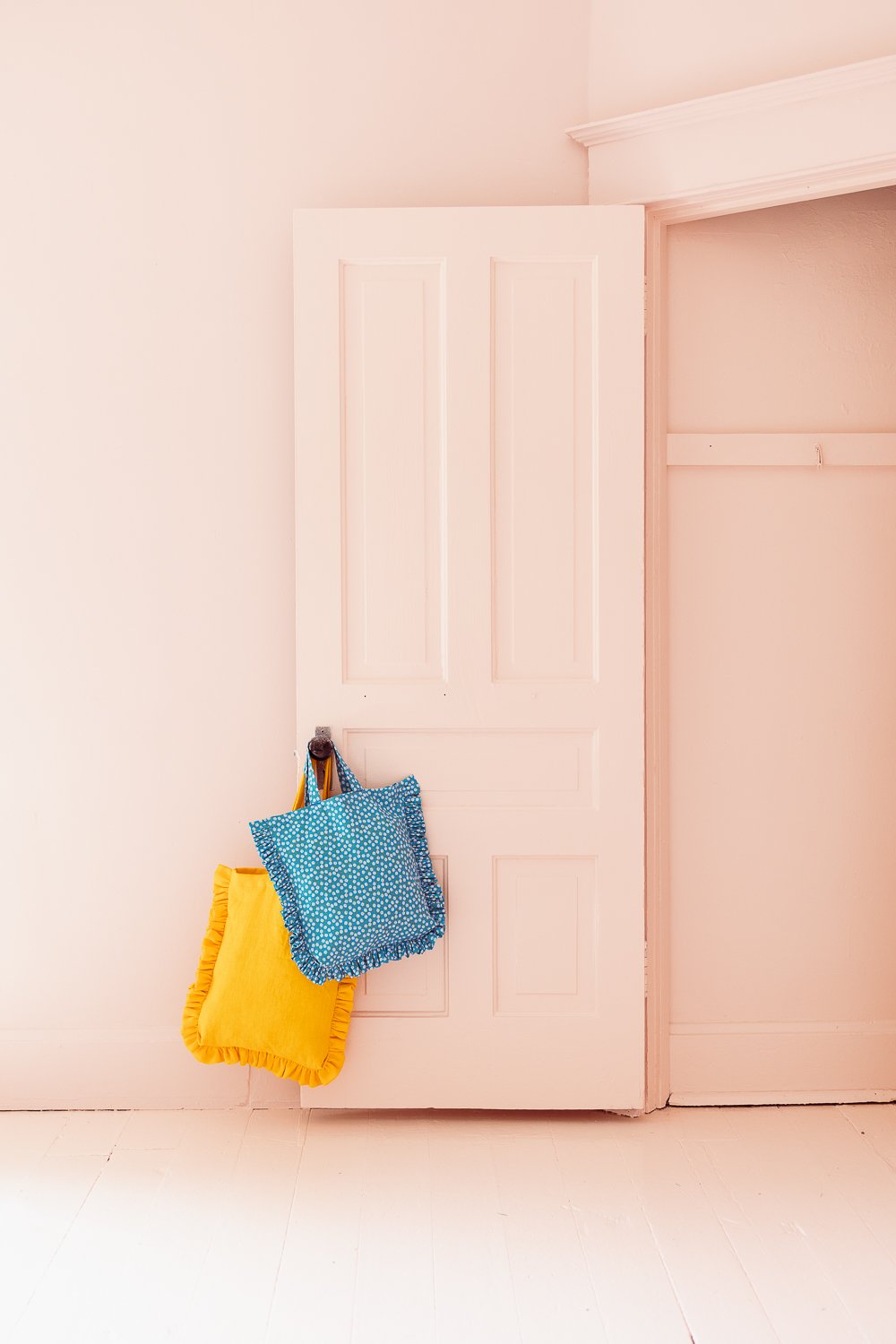

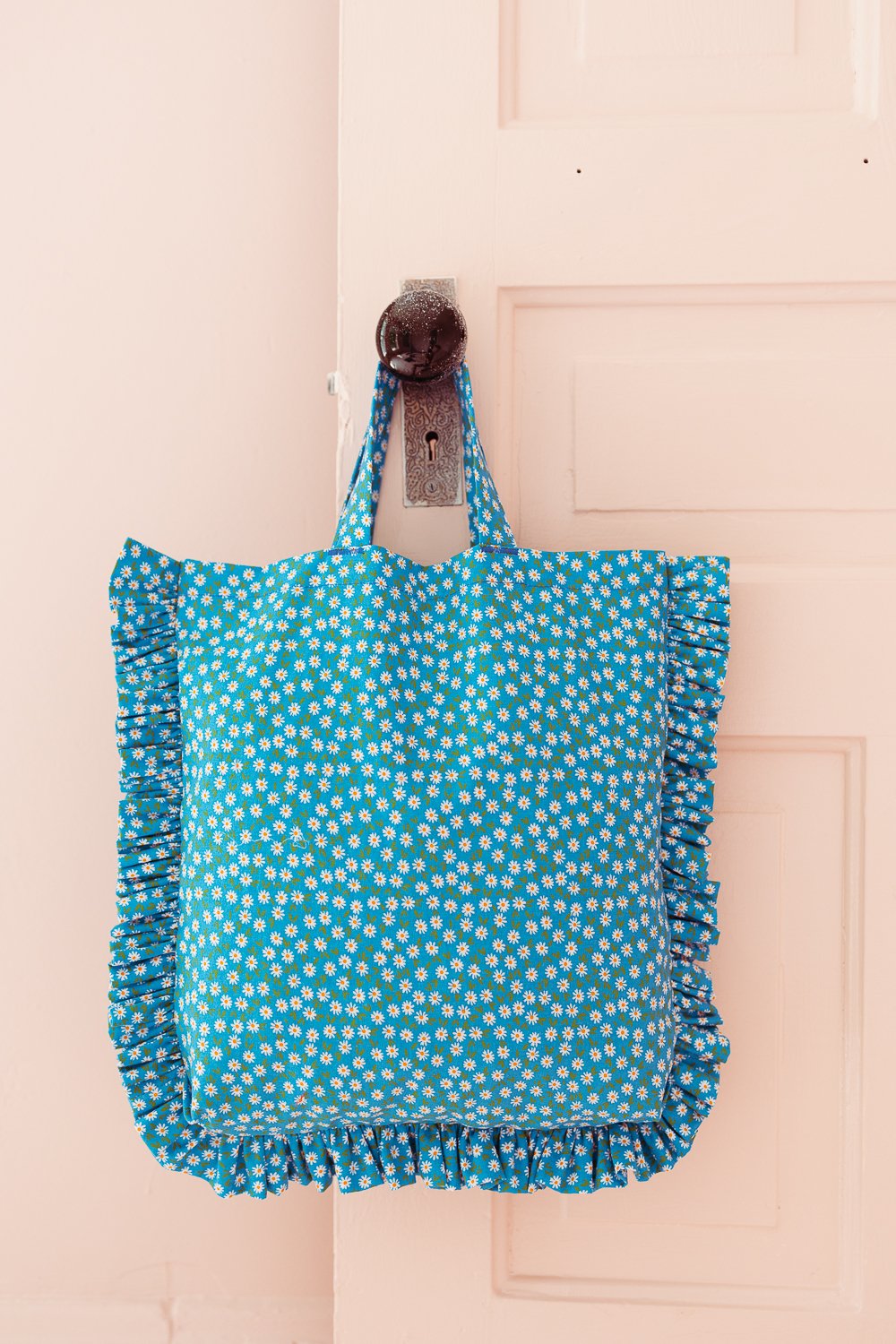
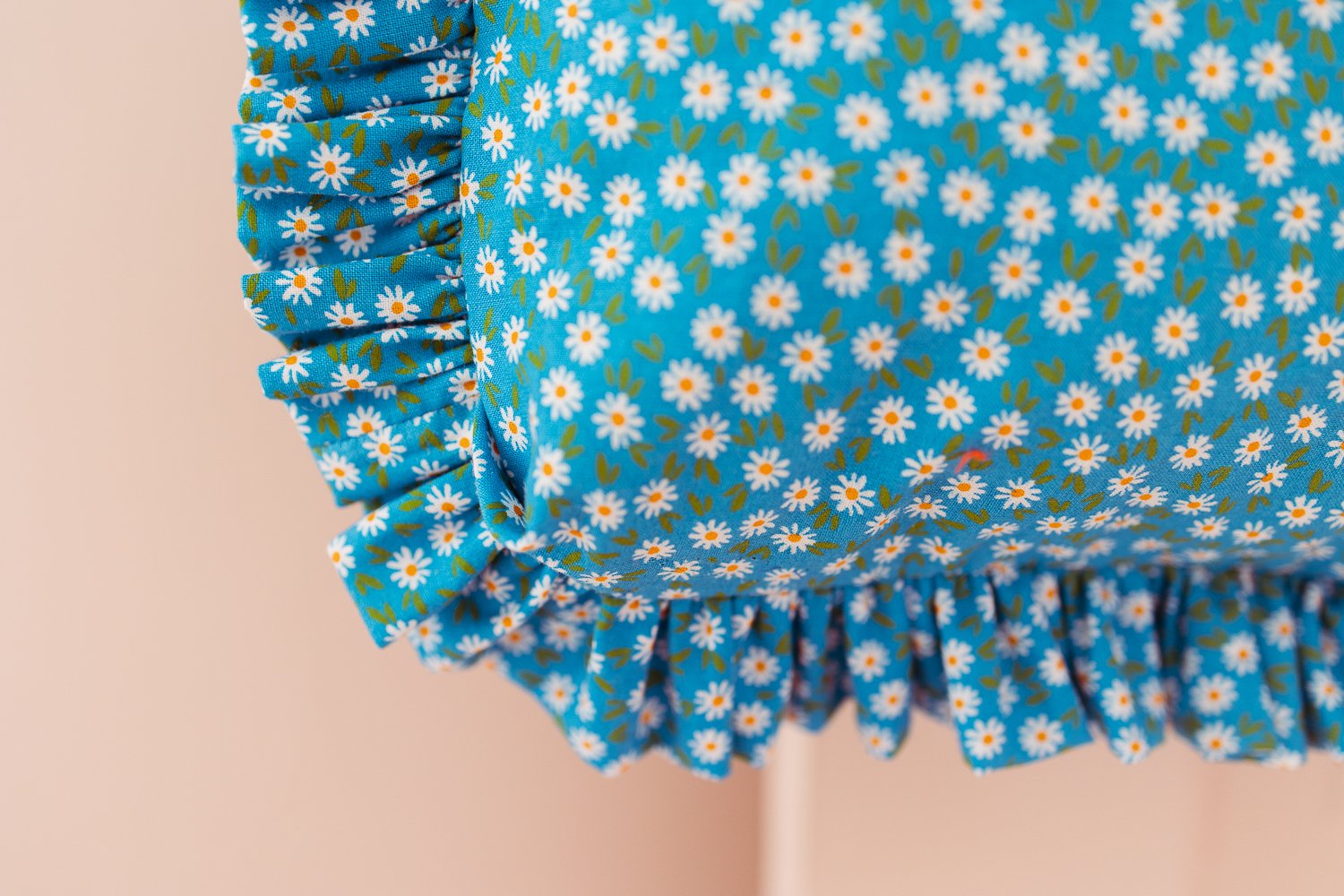
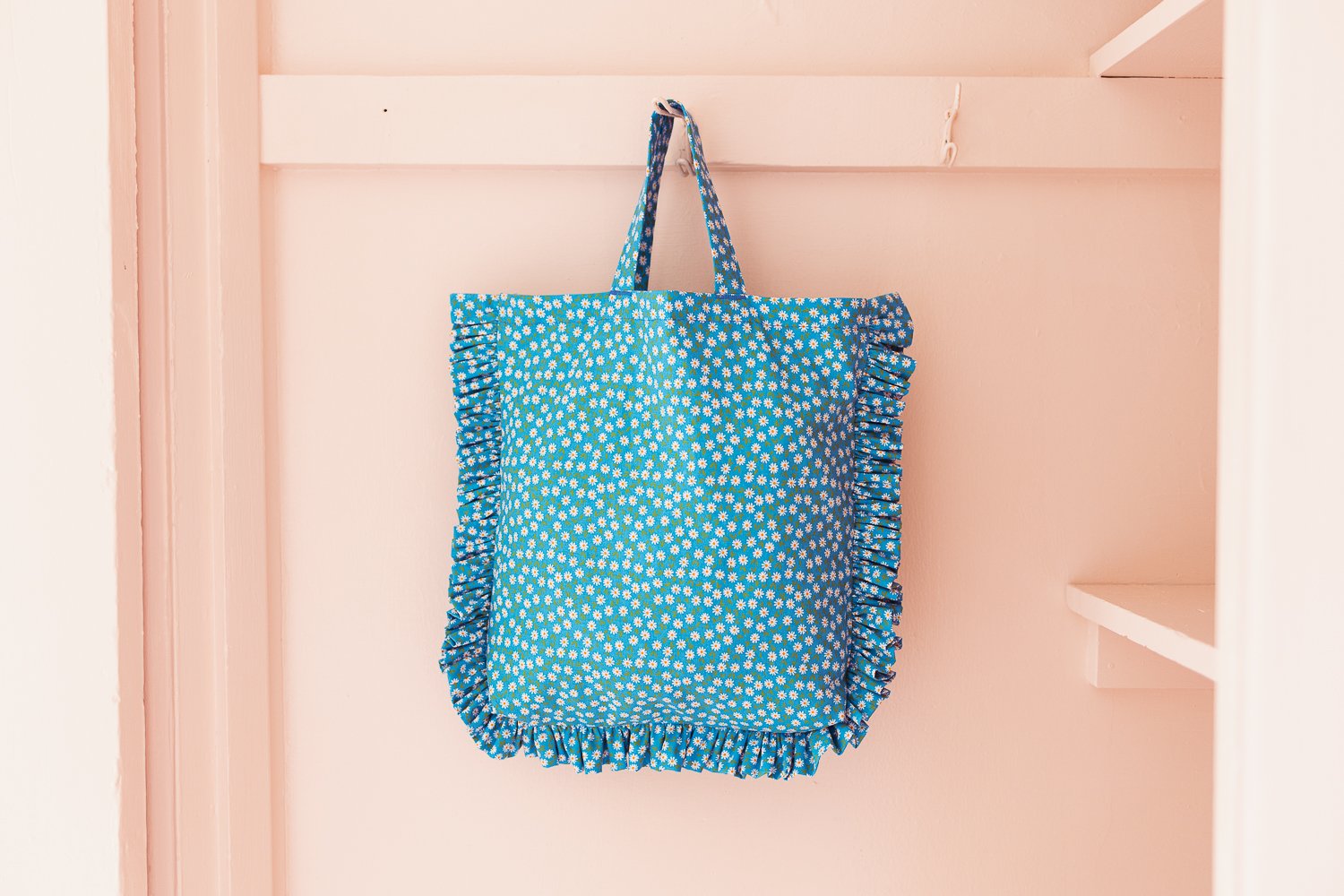
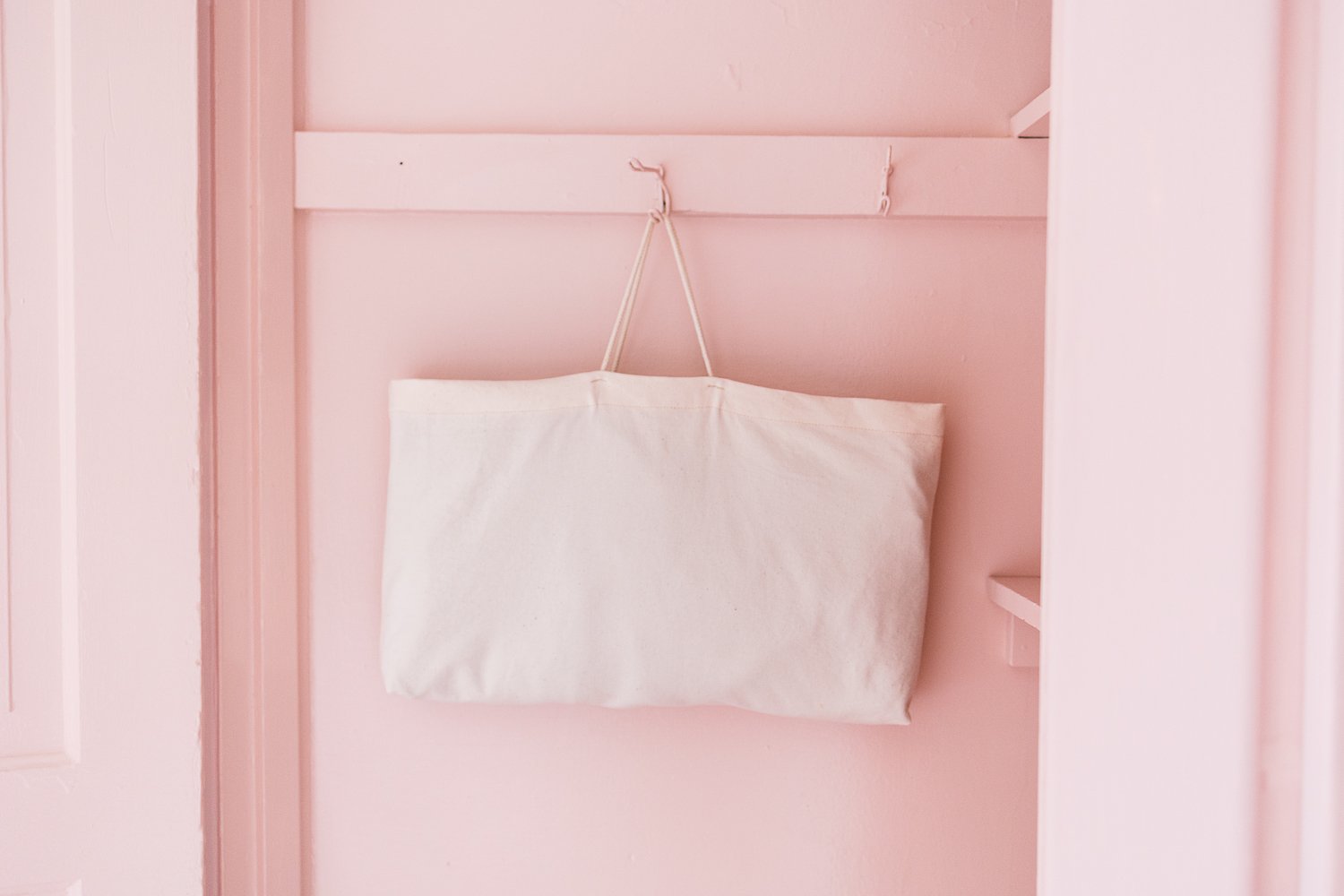
To continue the ruffle tutorial series, here is a step by step guide to sew a ruffle tote.
Check out my other fun ruffle tutorials!
Let’s make something!
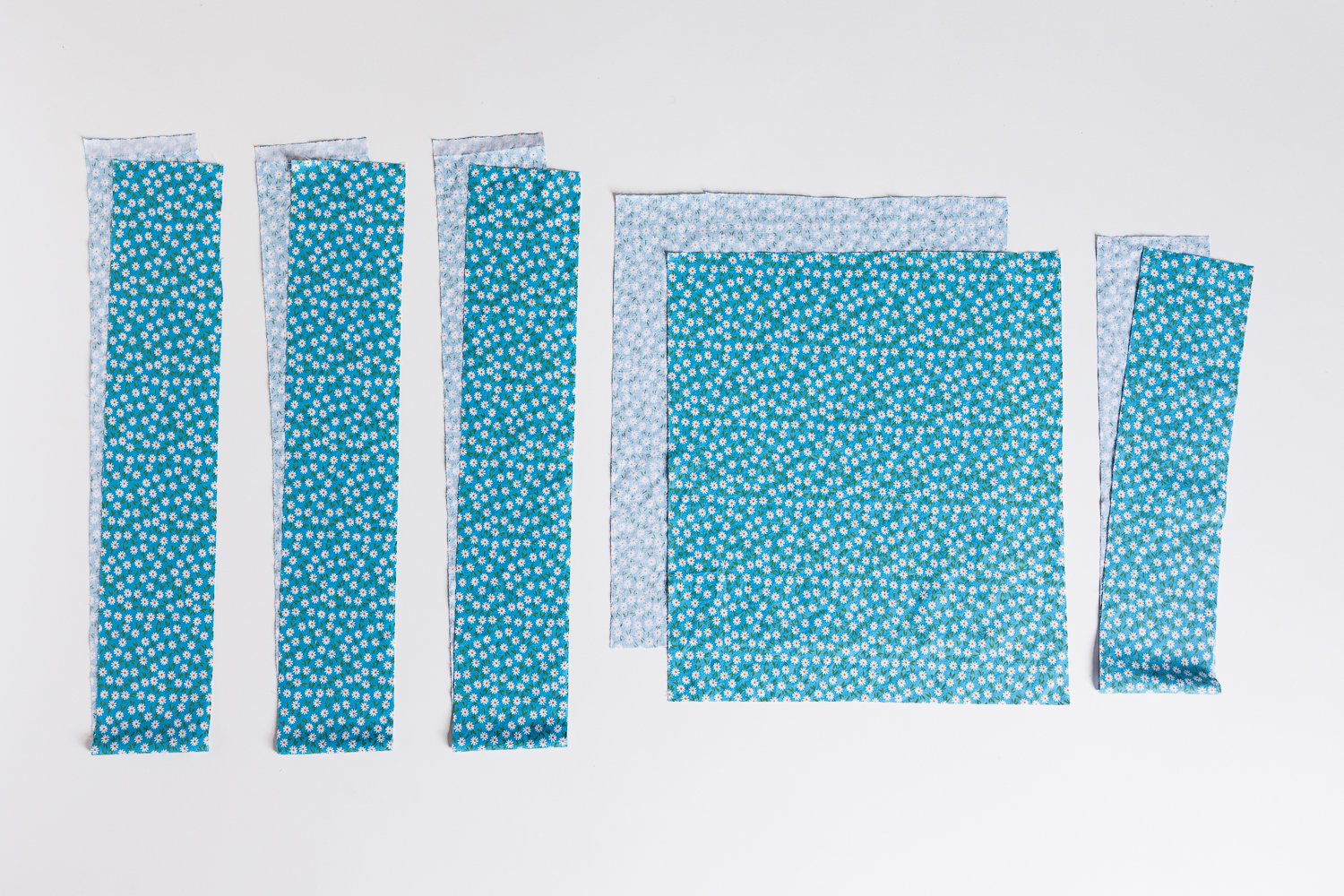
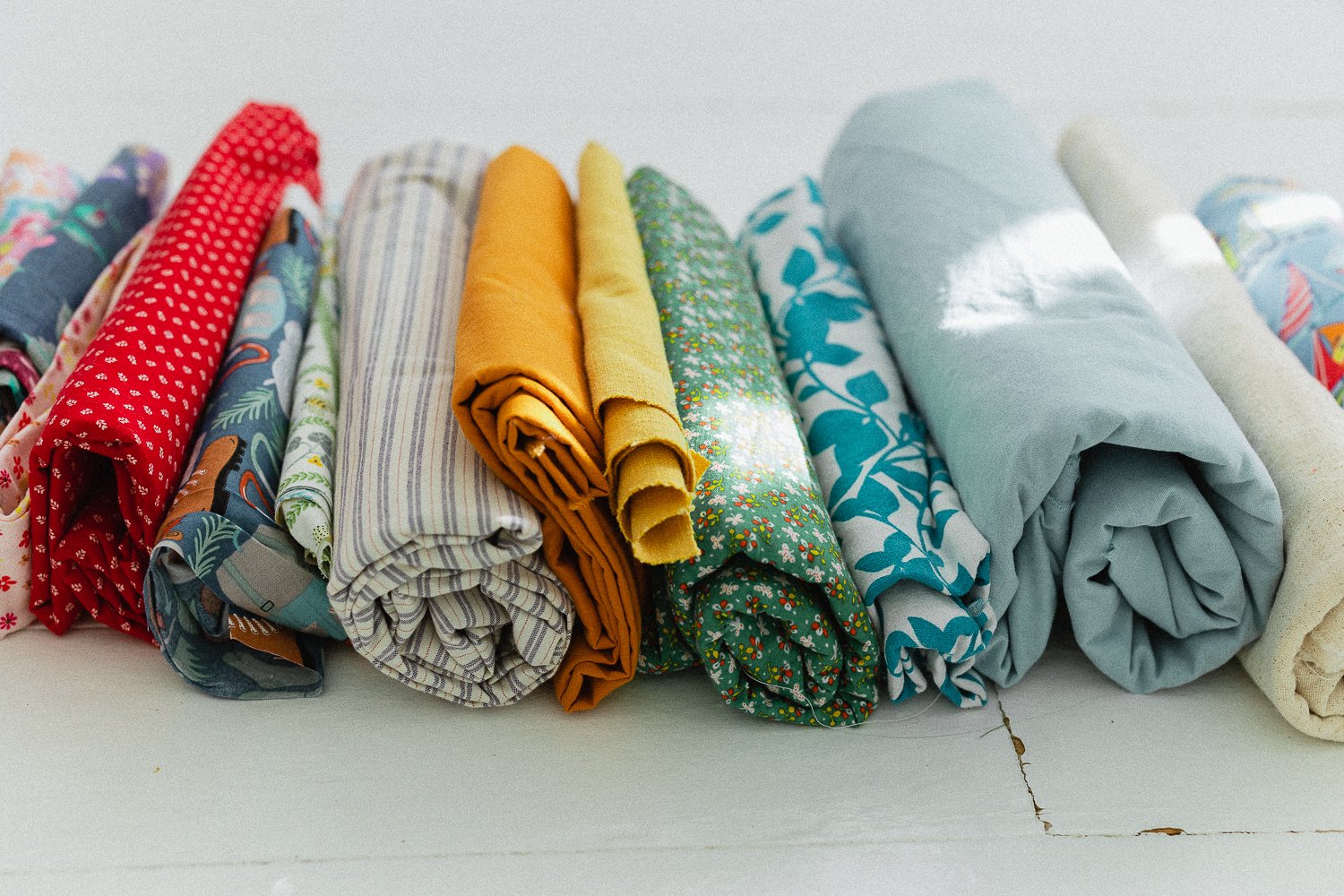
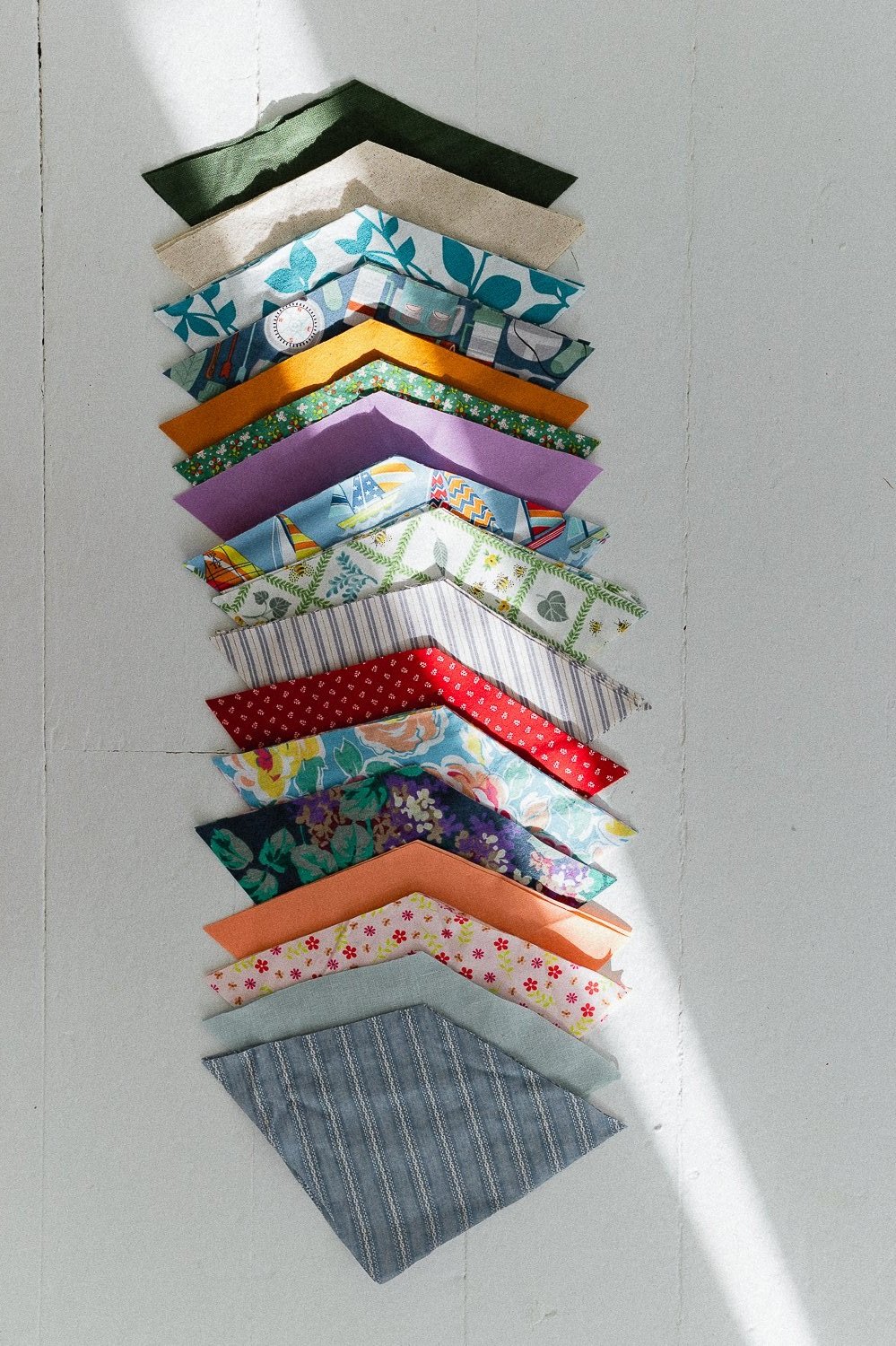
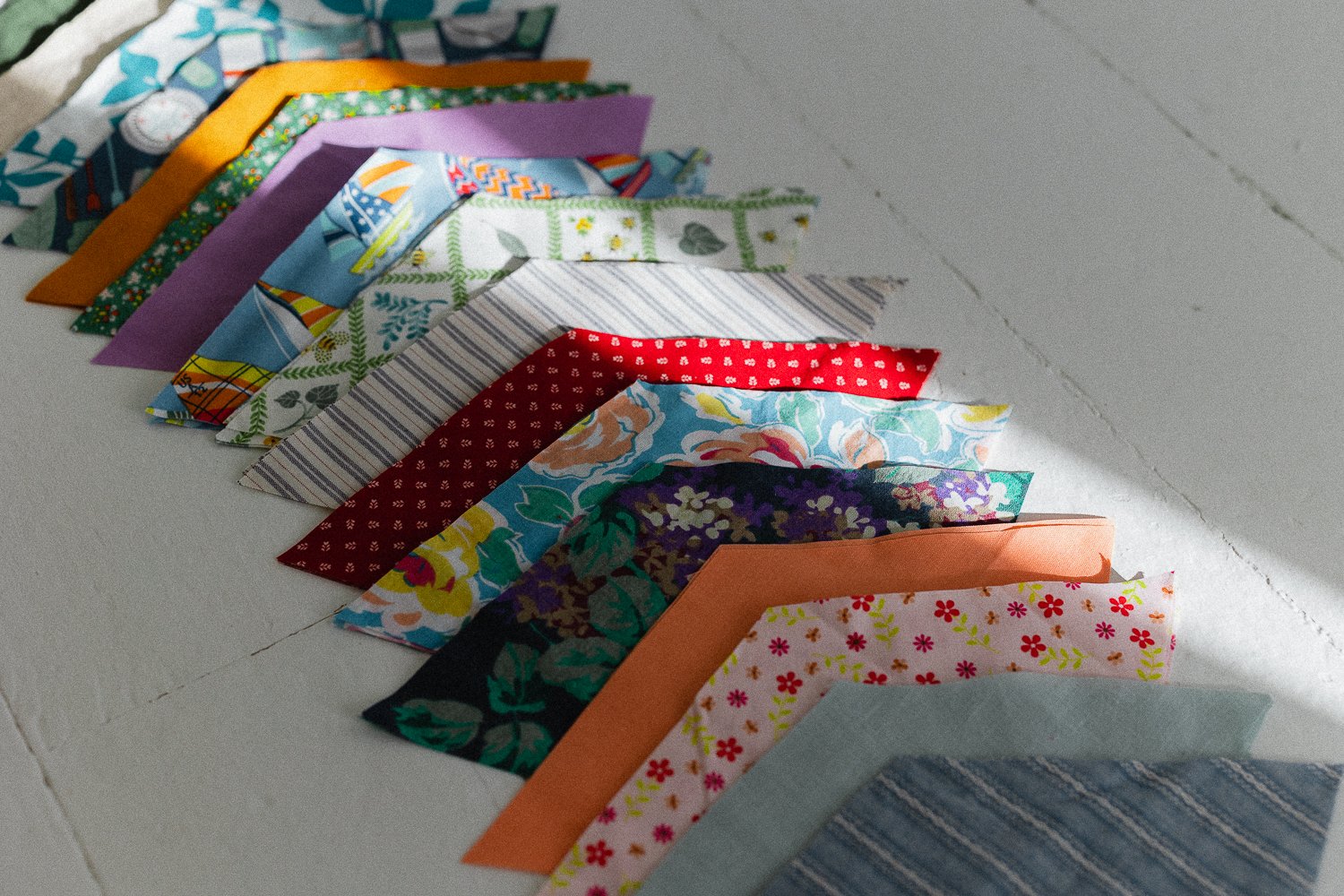
Step 1: Cut out the fabric.
Body: Two 14” x 16” (35 cm x 40 cm)
Handle: One 4” x 32” (10 cm x 81 cm)
Ruffle: Three 4” x 40” (10 cm x 102 cm)
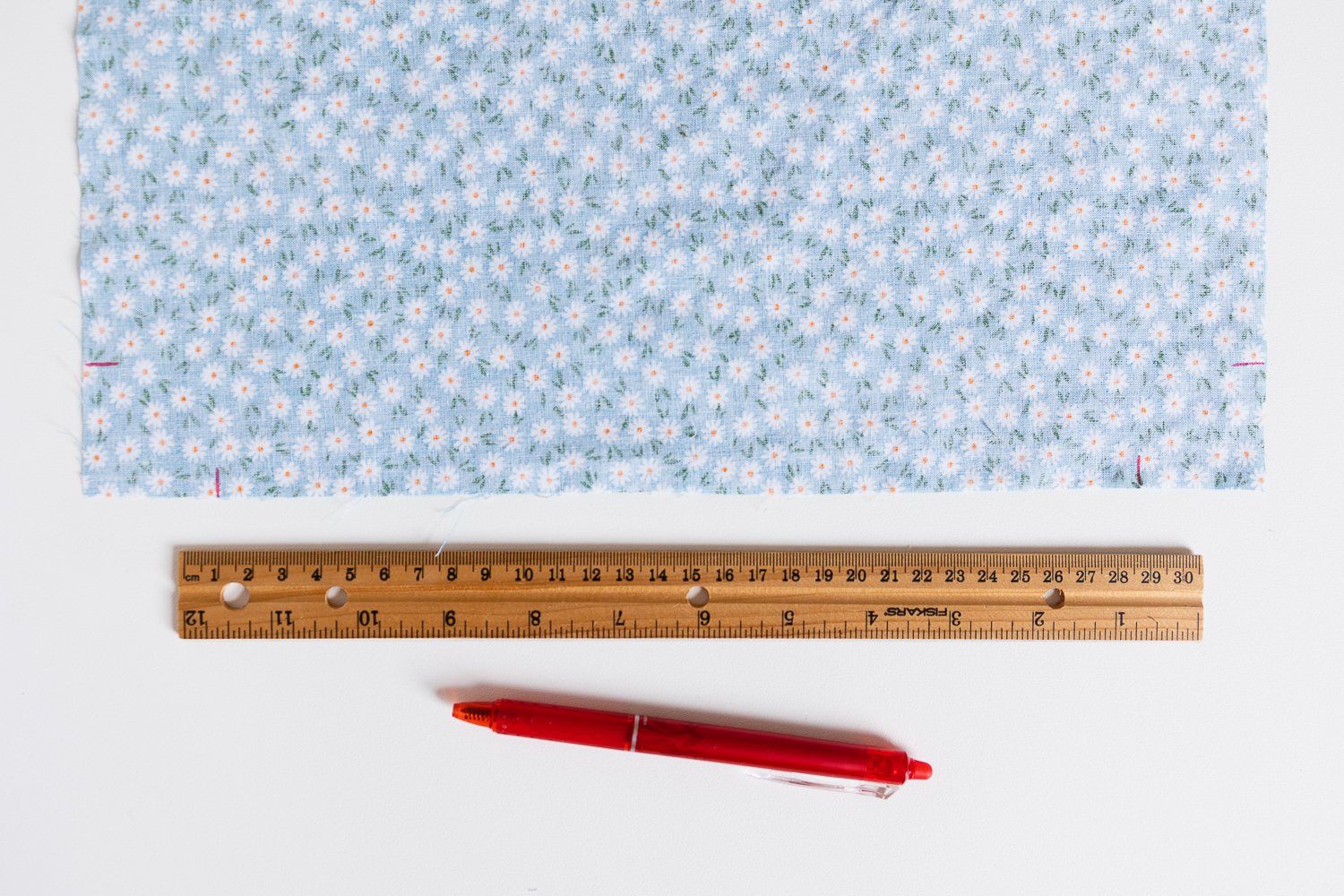
Step 2: Mark 1 1/2” (3.8 cm) in and up from each bottom corner.
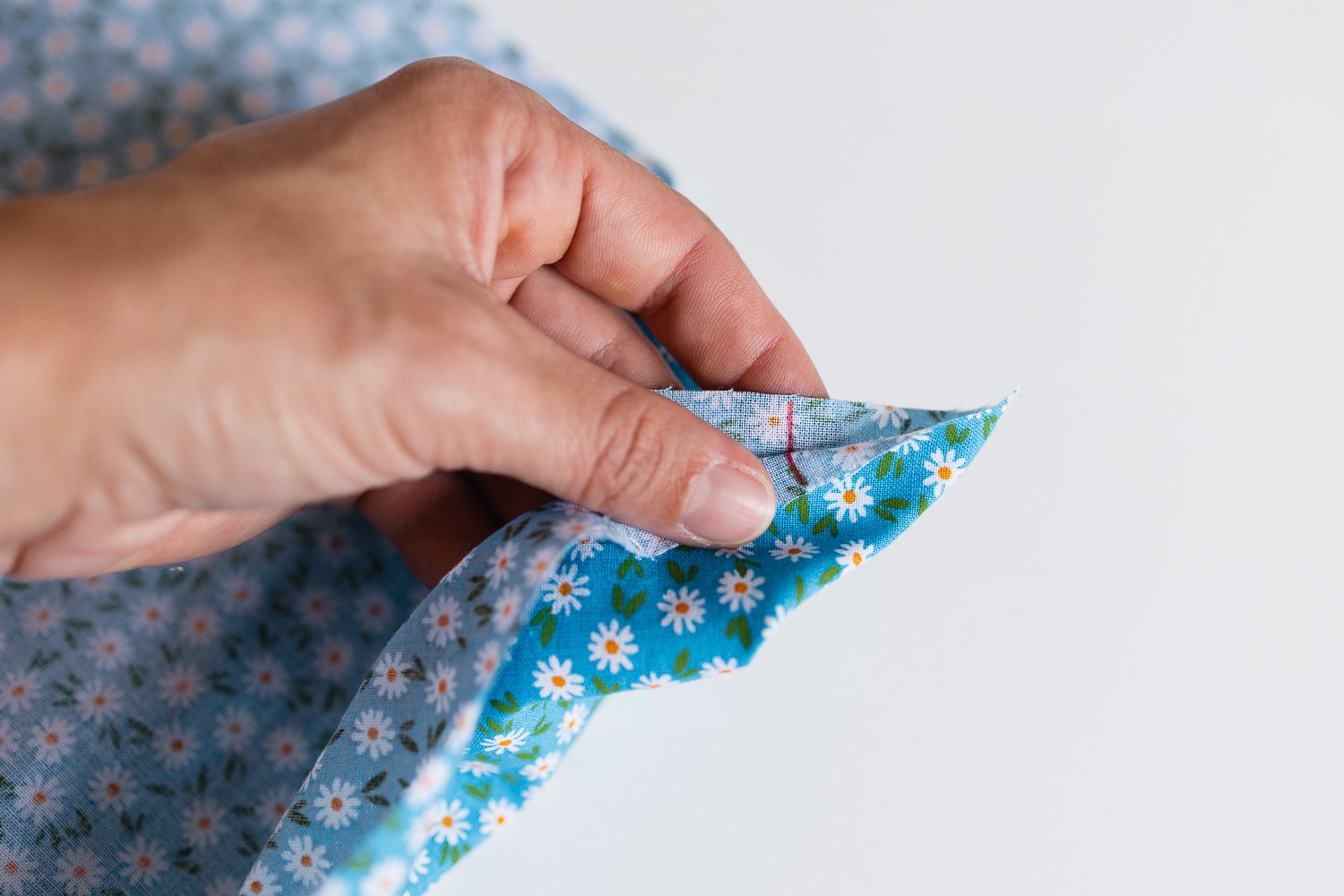
Step 3: Match up the marks. Fold the corner up toward the top of the tote at the marks. Clip in place.
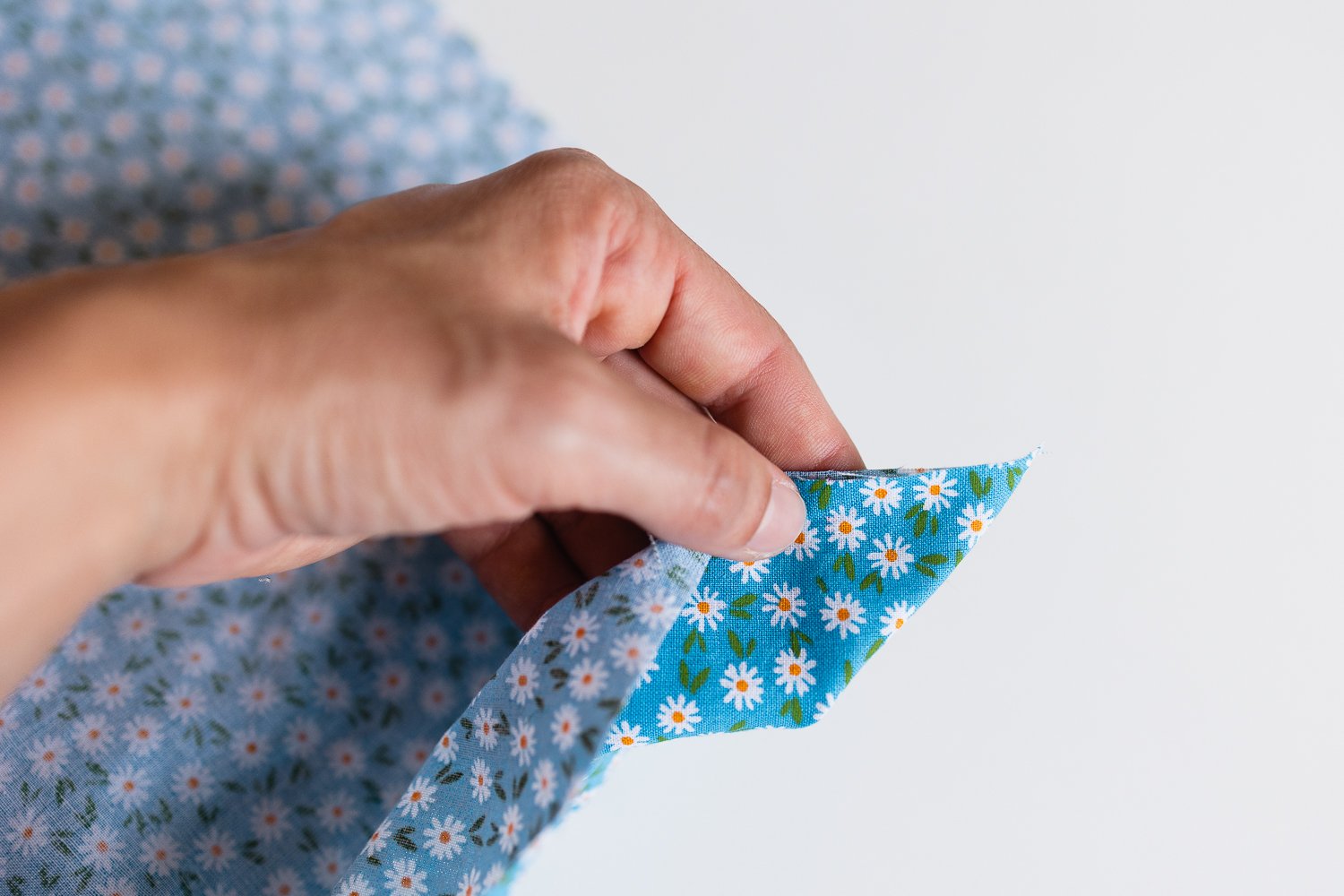
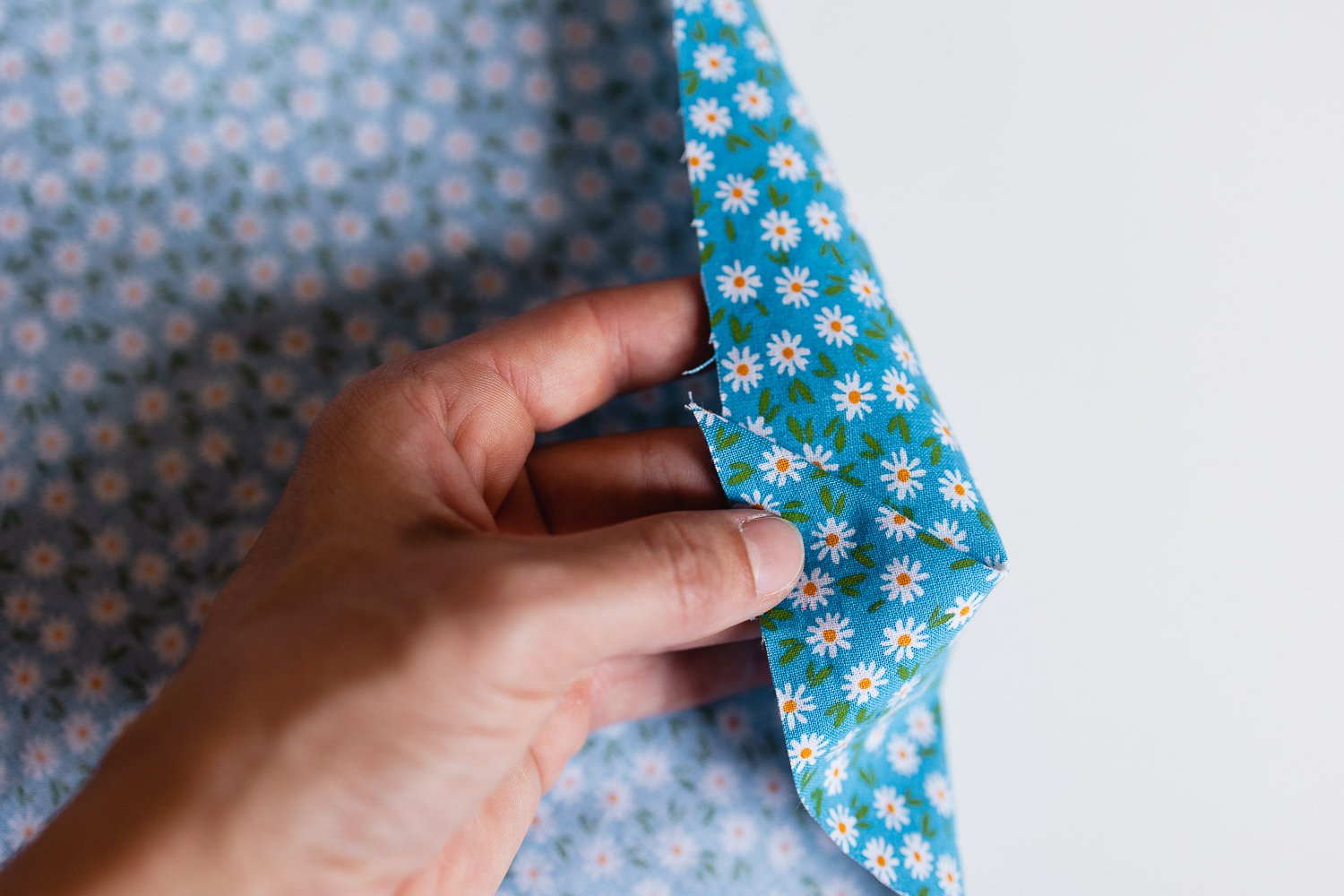
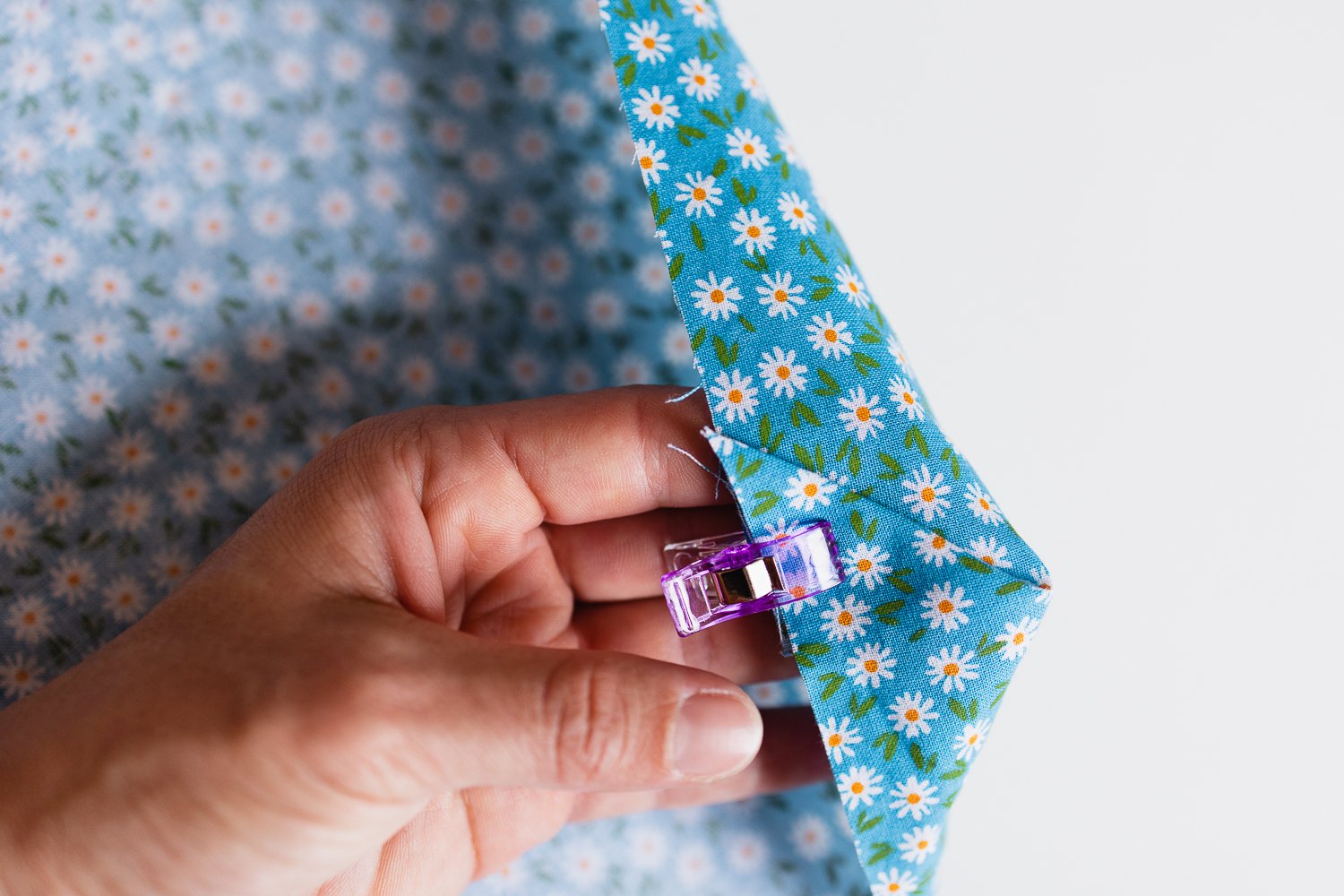
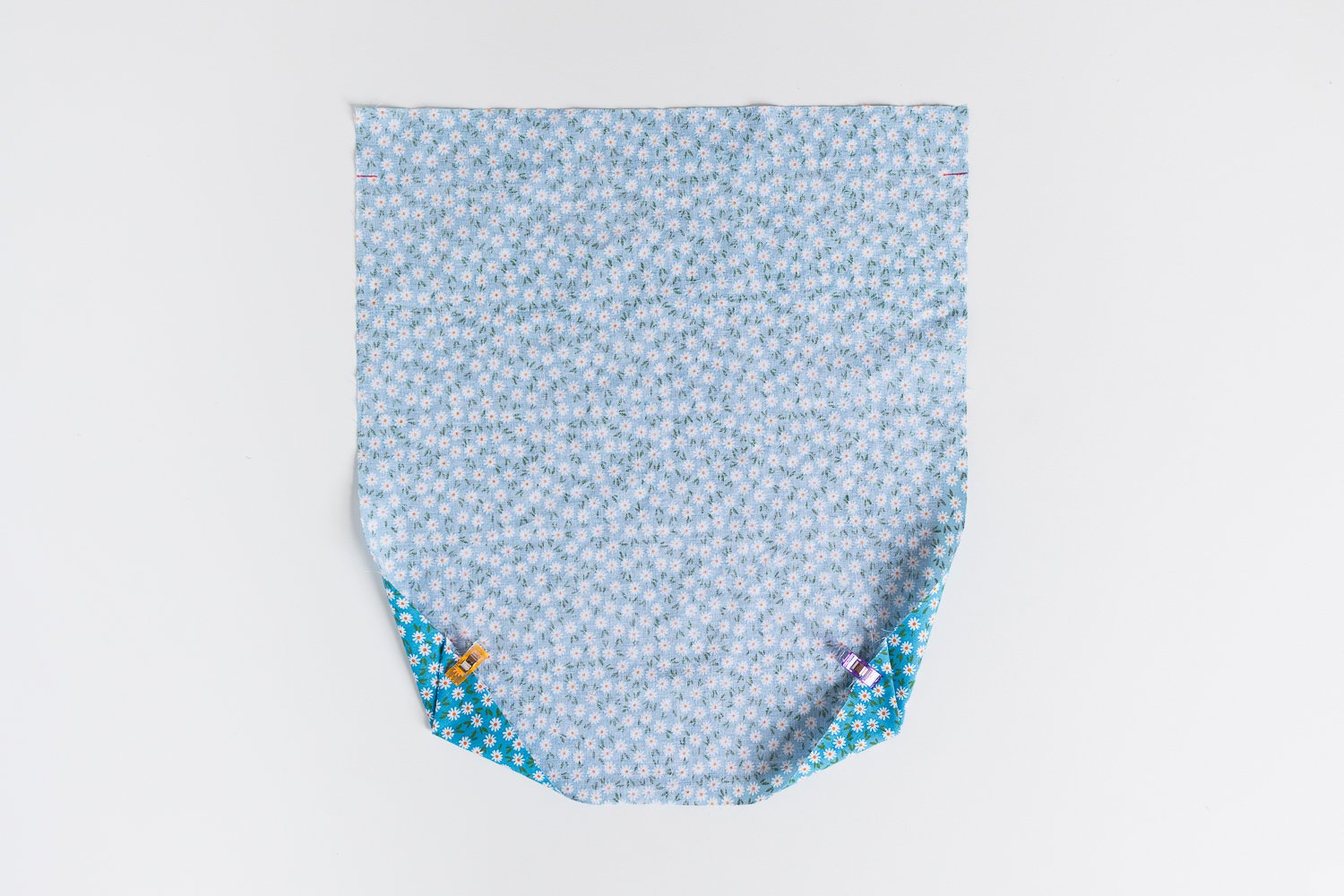
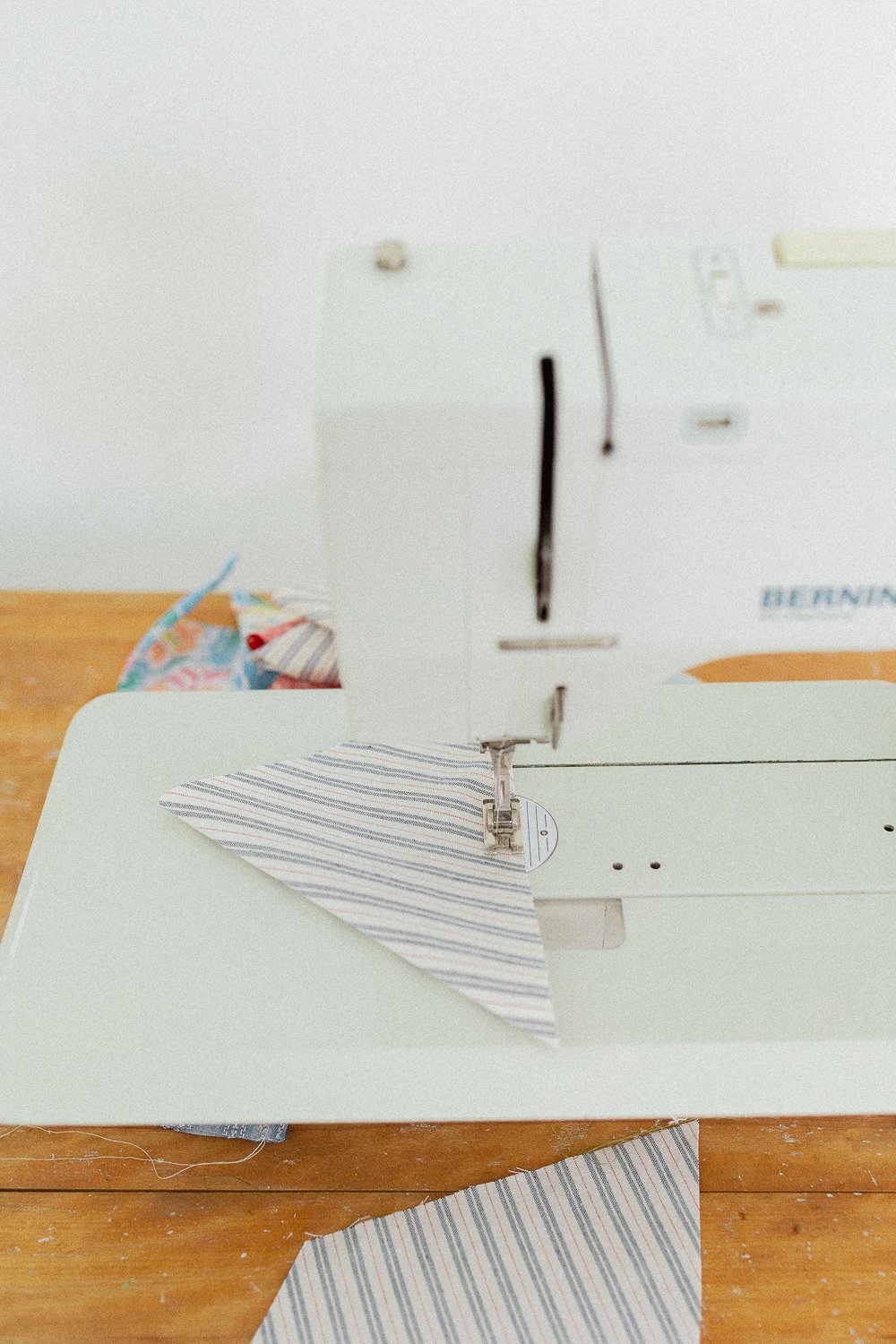
Step 4: Sew the ruffle strips together with 3/8” (1 cm) seam allowance. Press seams open.
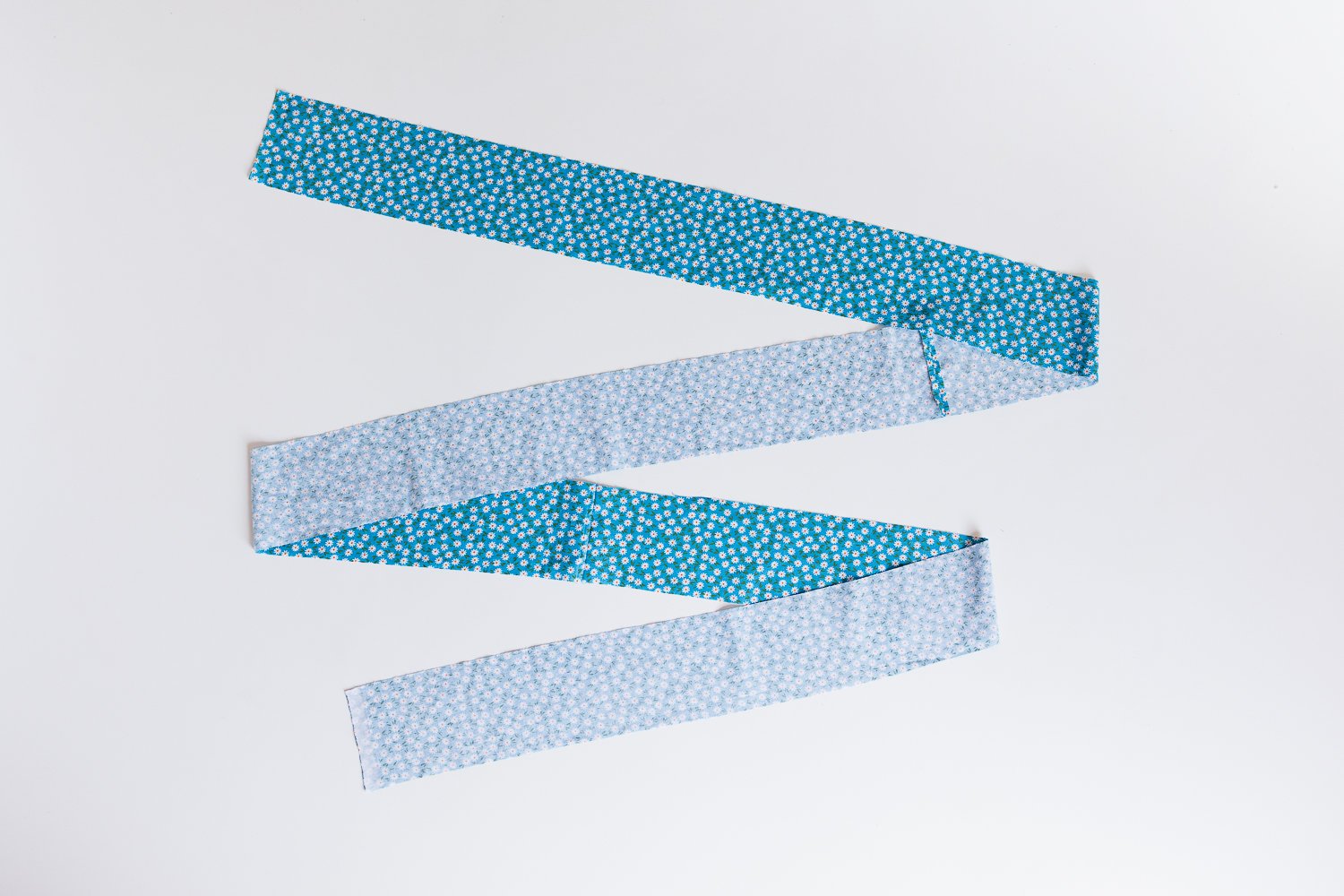
Step 5: Fold ruffle strip right sides together and sew ends with 3/8” (1 cm) seam allowance. Then turn right side out and press corners.
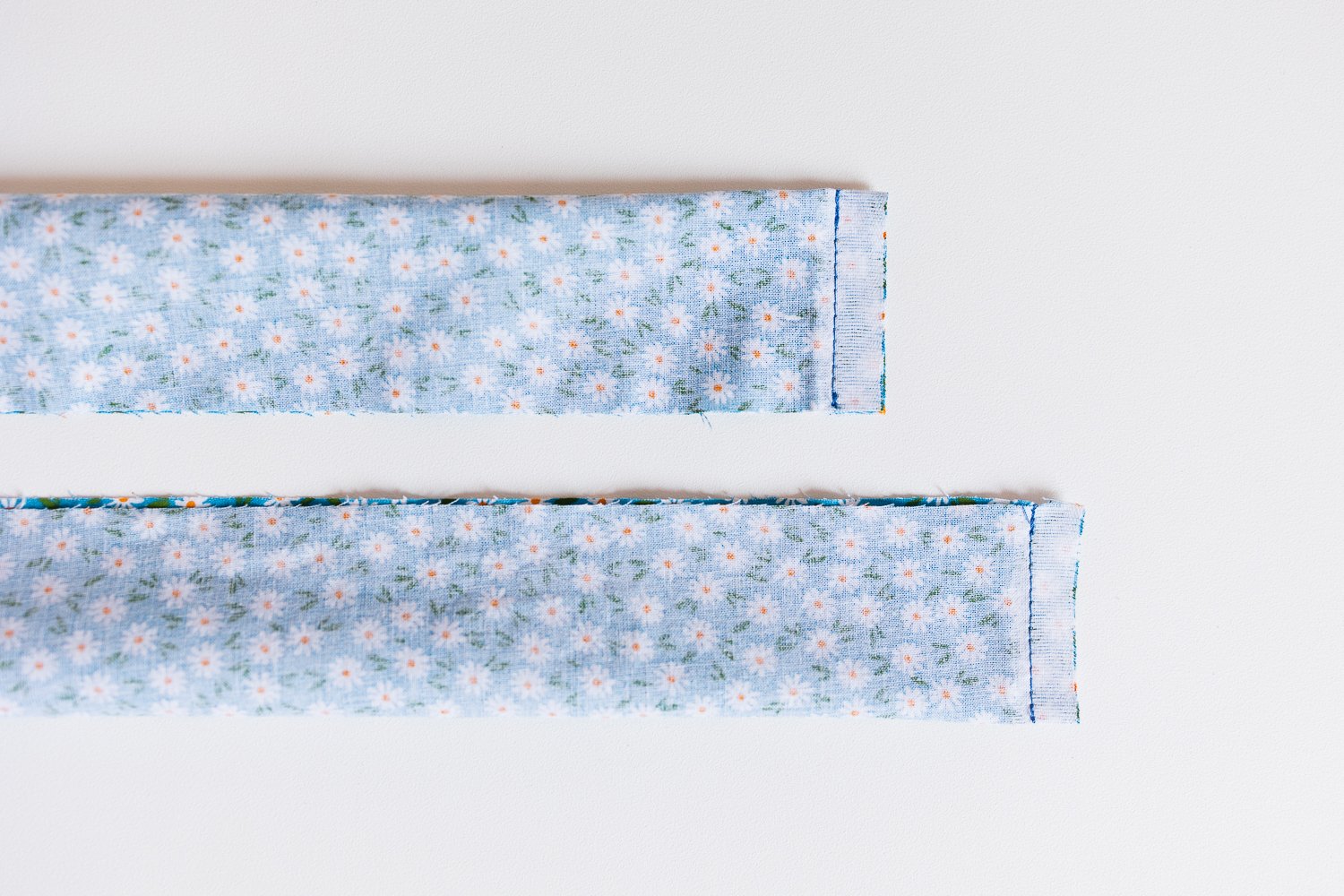
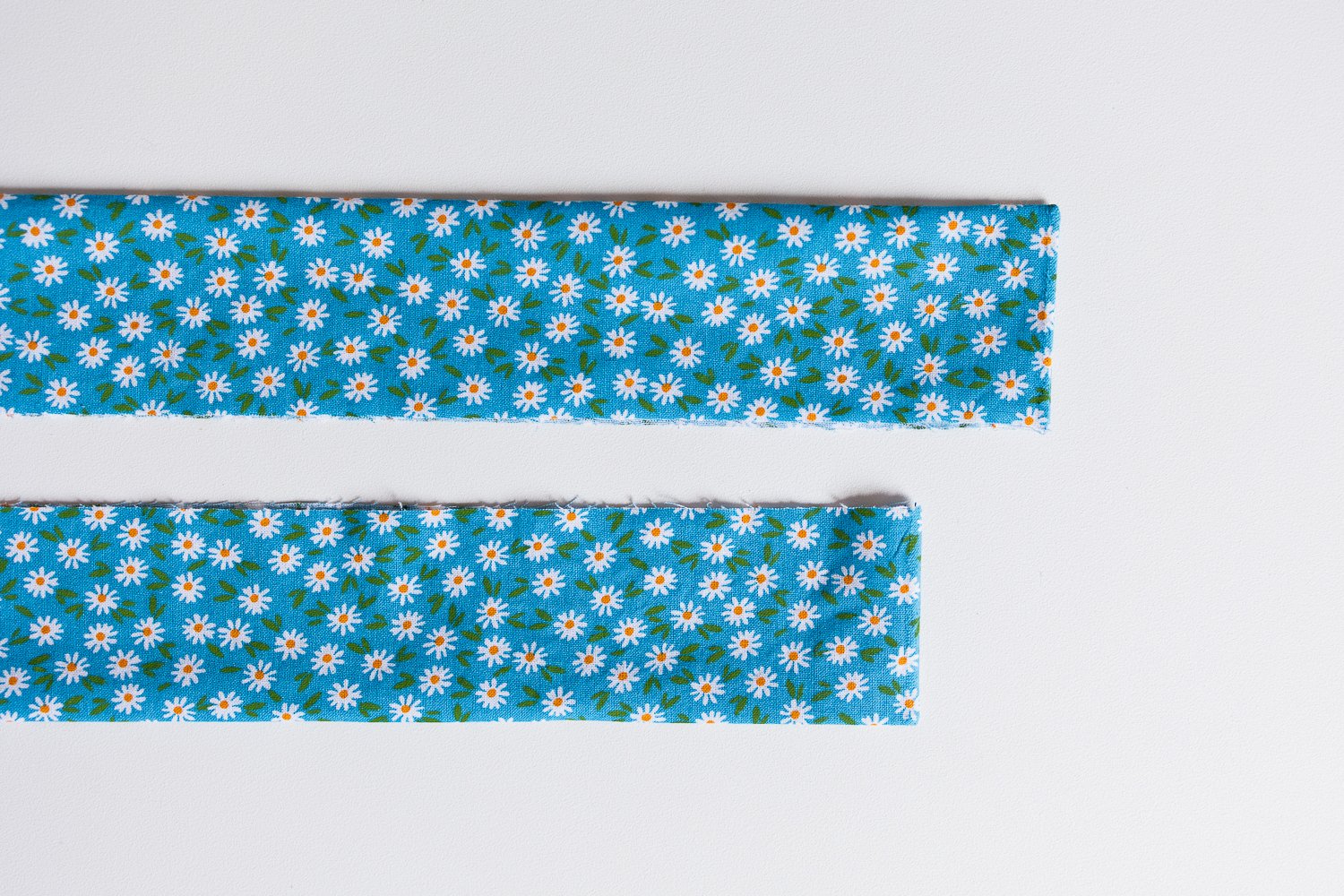
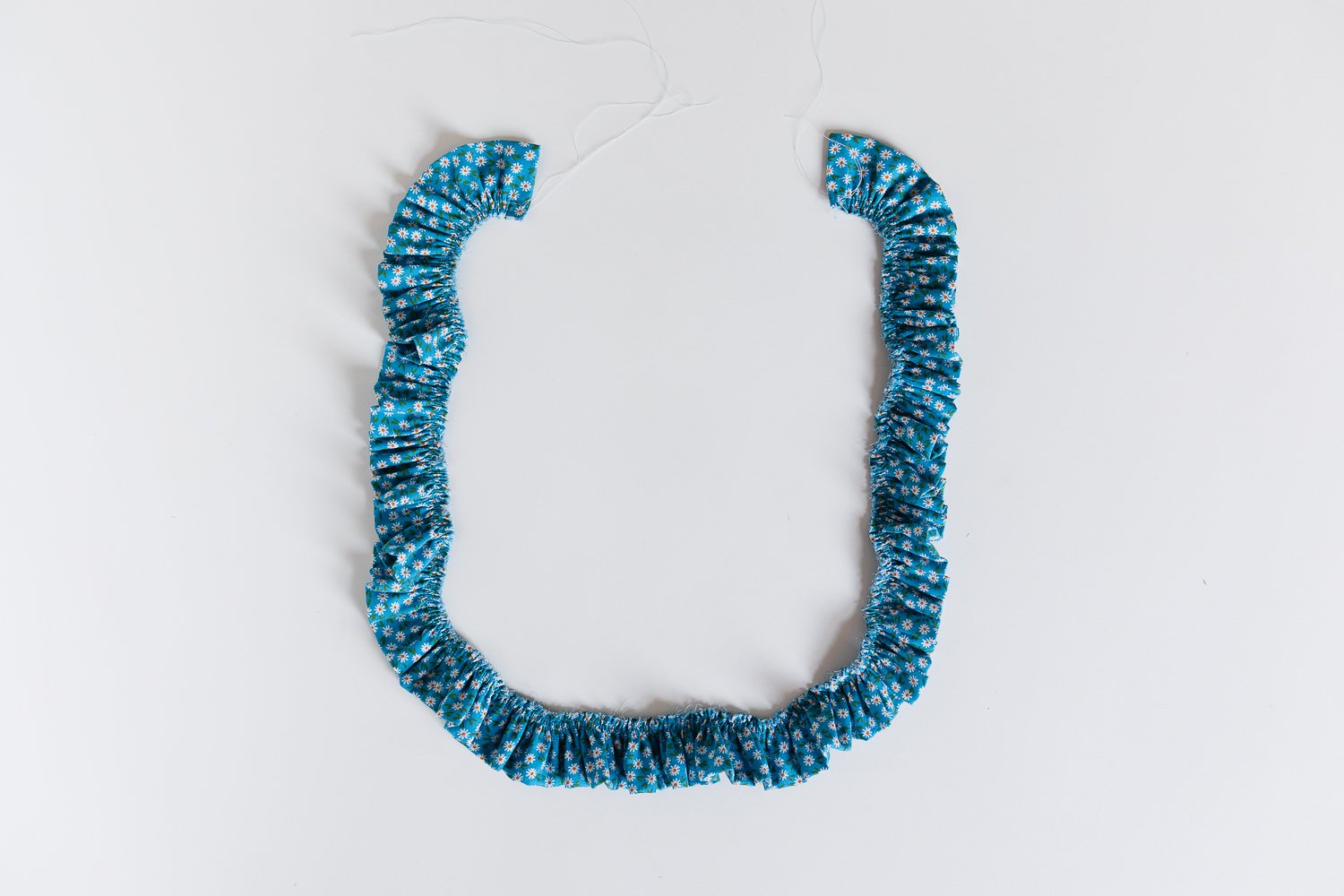
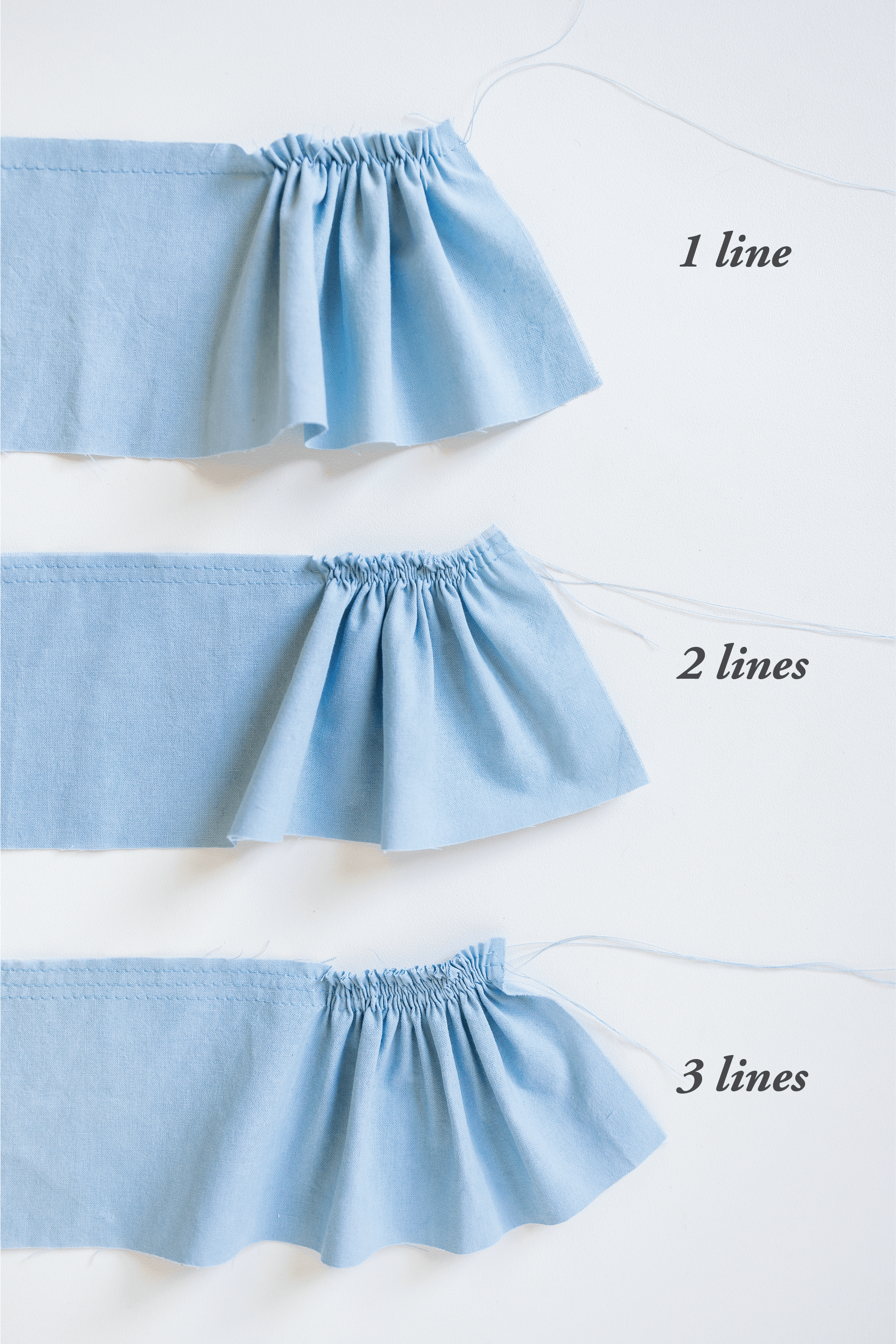
Step 6: Sew two loose lines of stitching along the whole length of the ruffle for gathering. Sew the first line with 3/8” (1 cm) seam allowance and the second line with 1/4” (6 mm) seam allowance.
Check out my tutorial Ruffles 101 if you want some tips on gathering fabric!
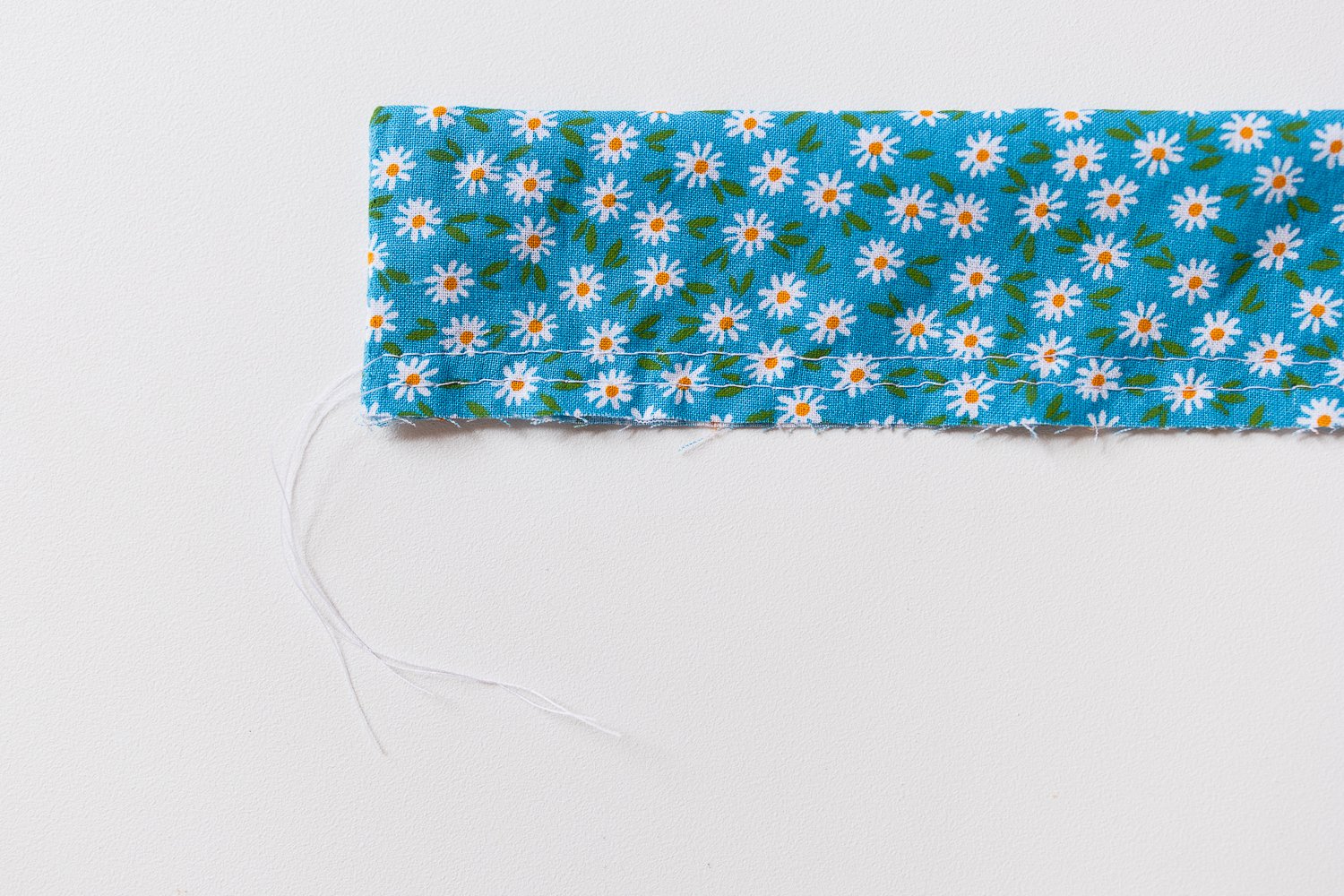
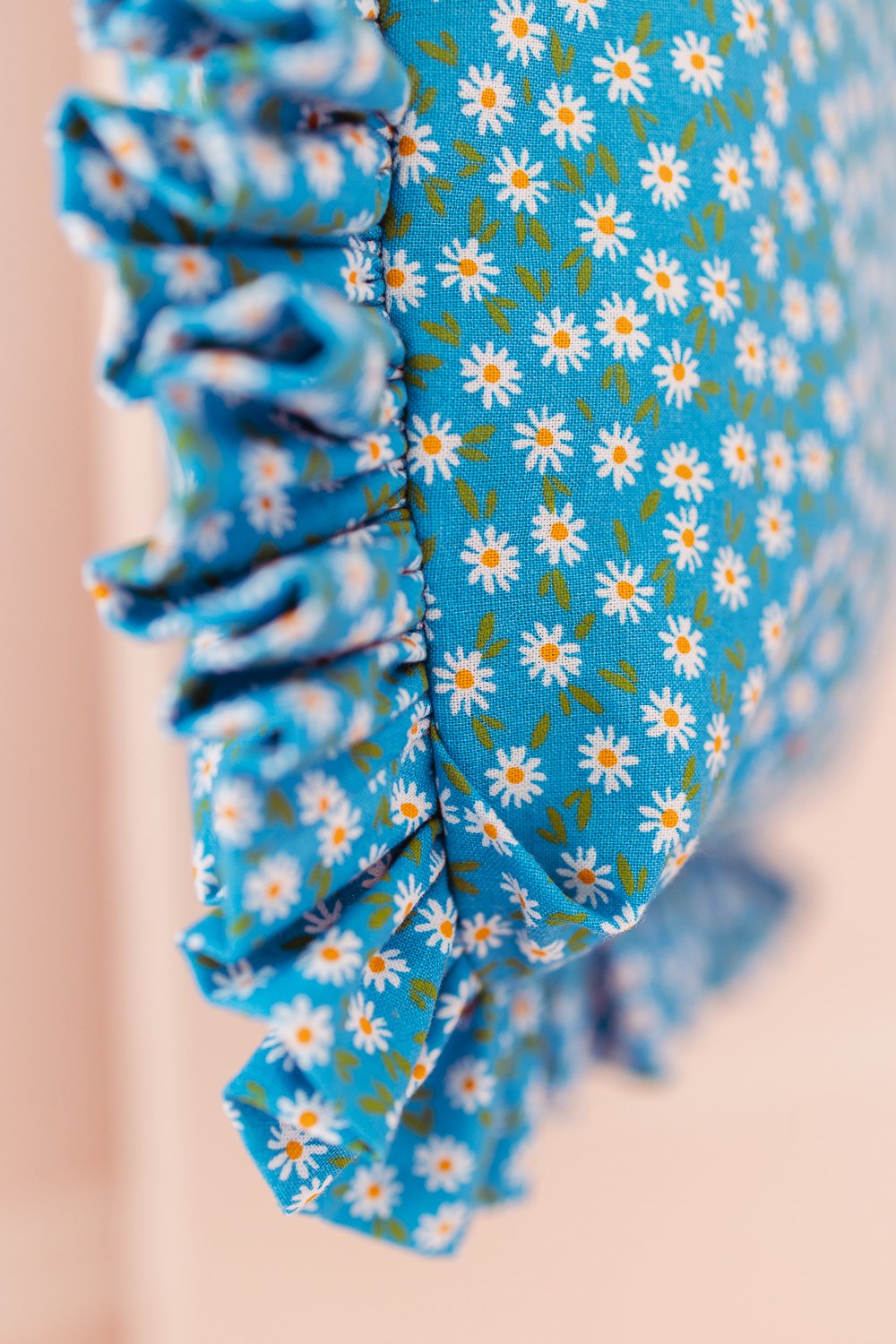
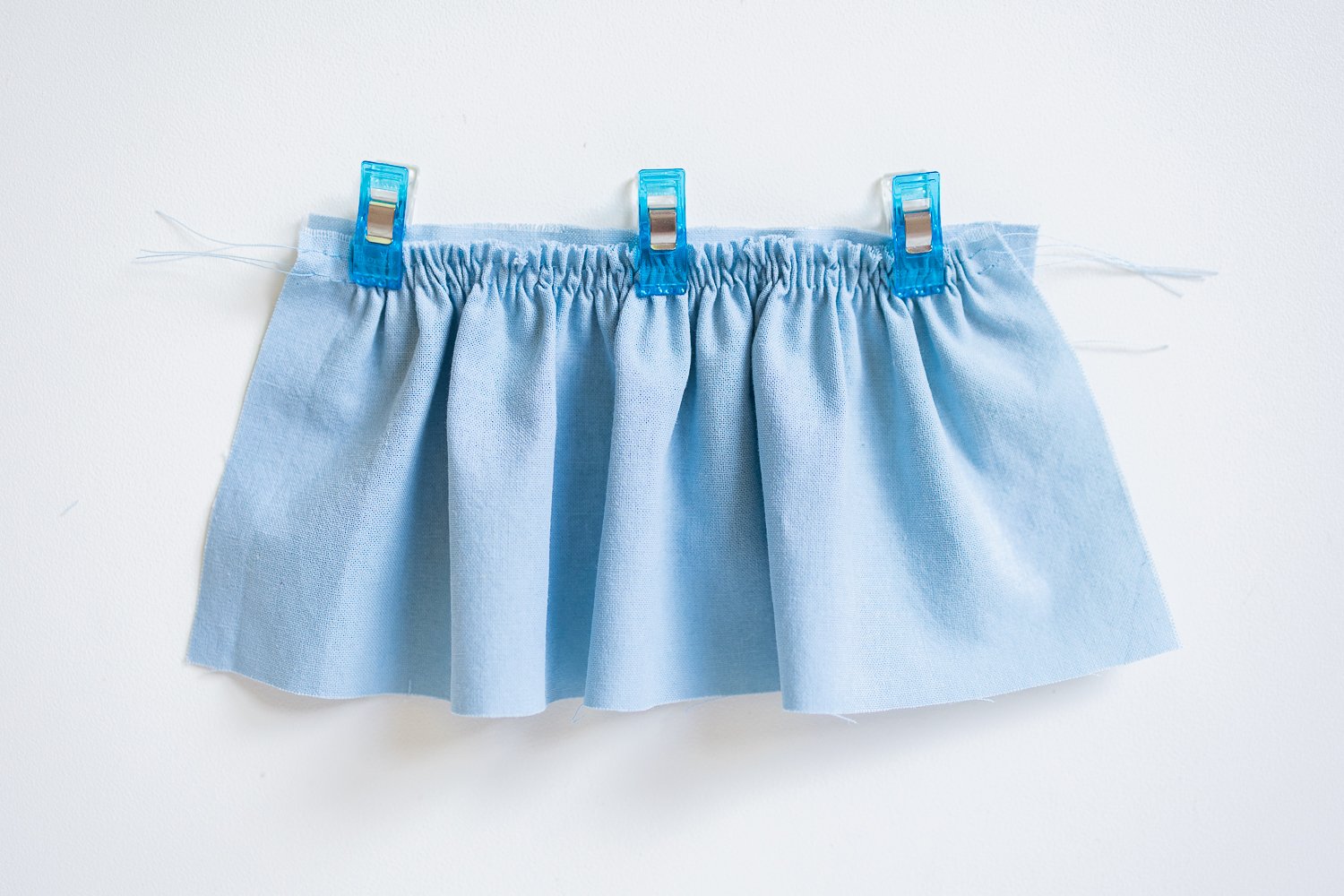
Step 7: Carefully gather fabric until the ruffle is roughly the right length to go around the sides and bottom of the tote.
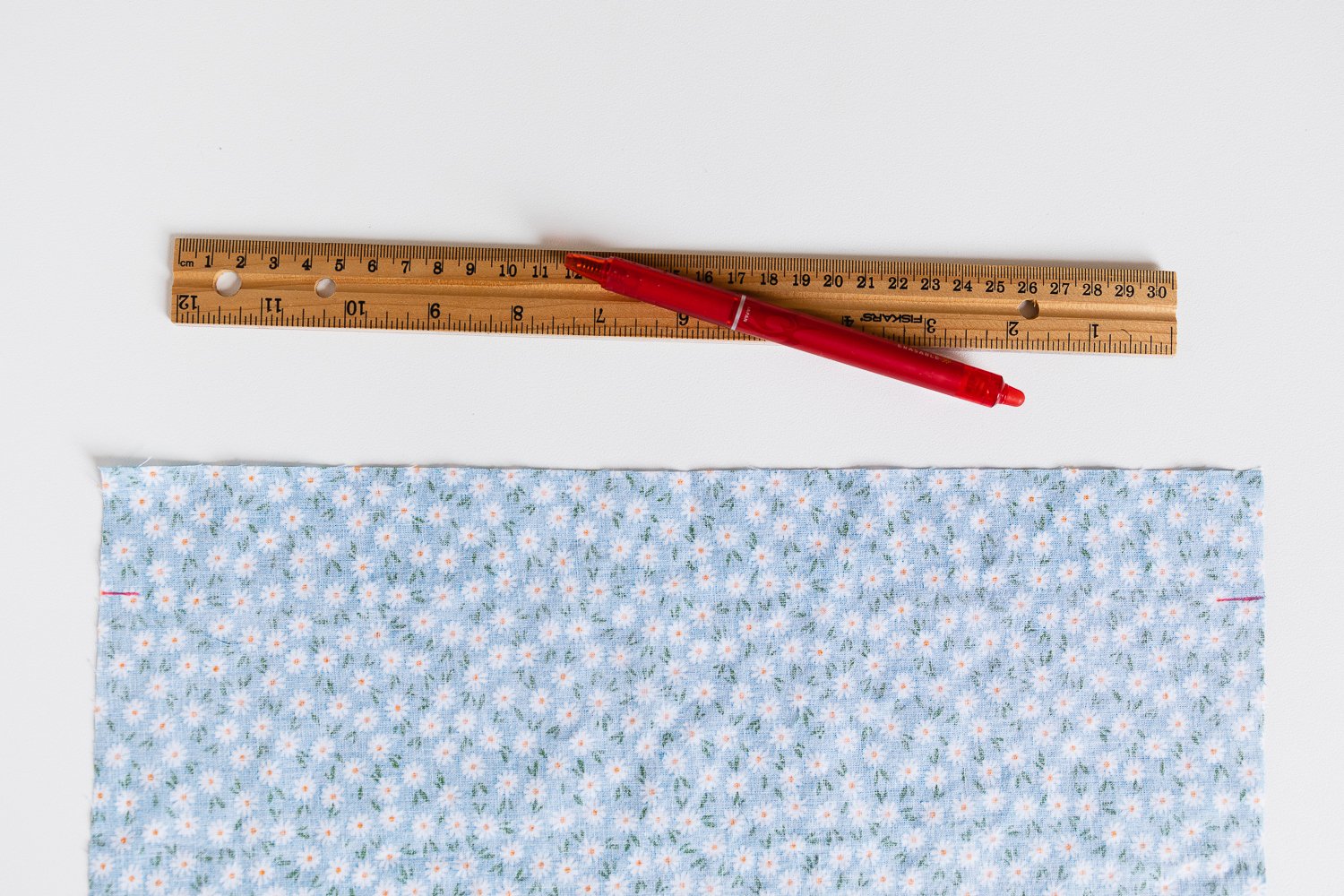
Step 8: Mark 1 1/2” (3.8 cm) down from the top of the tote.
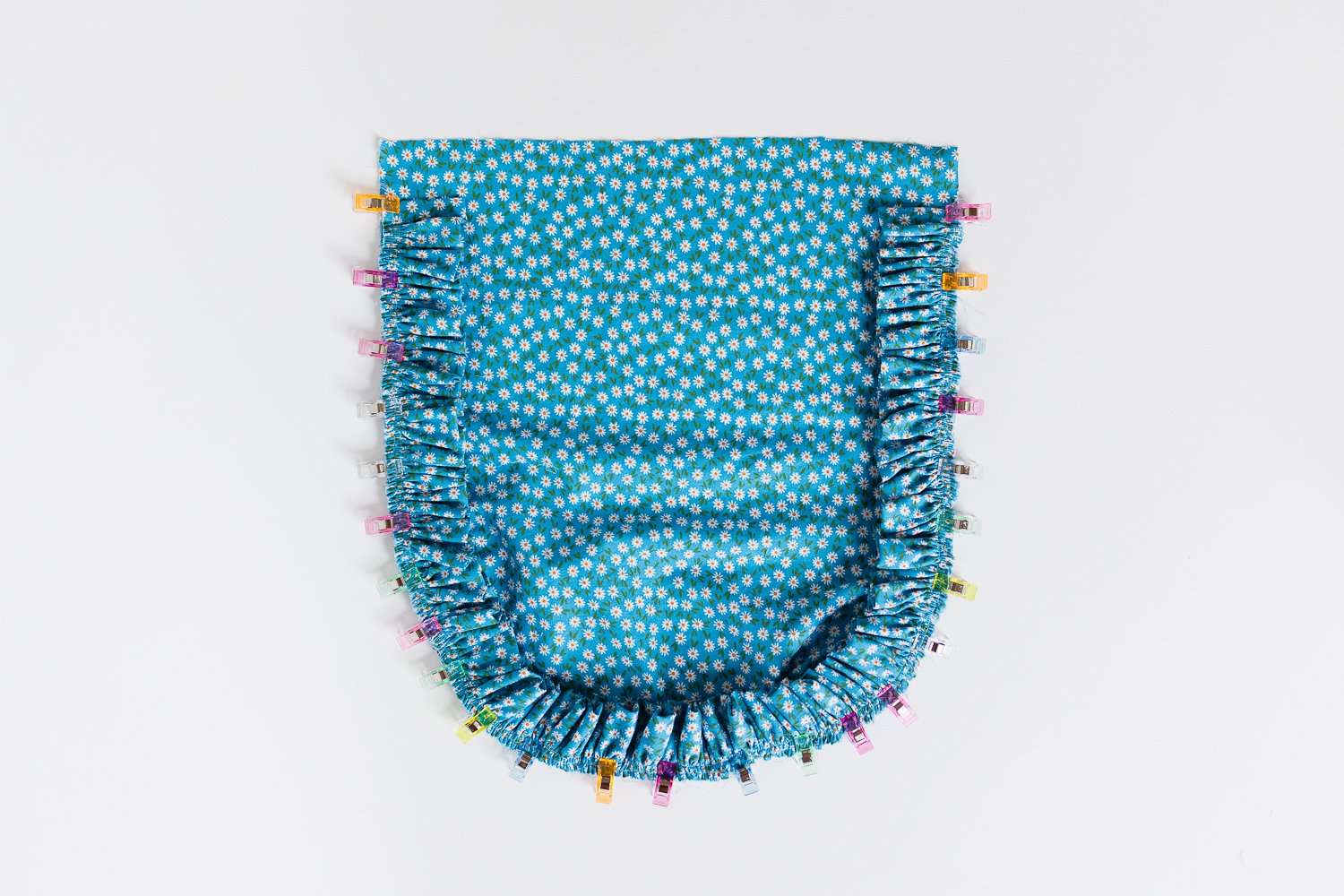
Step 9: Line up the ends of the ruffle with the 1 1/2” (3.8 cm) marks made in the above step on the right side of the fabric. Clip the ruffle all the way around the sides and bottom. Use lots of clips.
Step 10: Lay the other panel on top with right sides together and move some of the clips to hold all the layers in place.
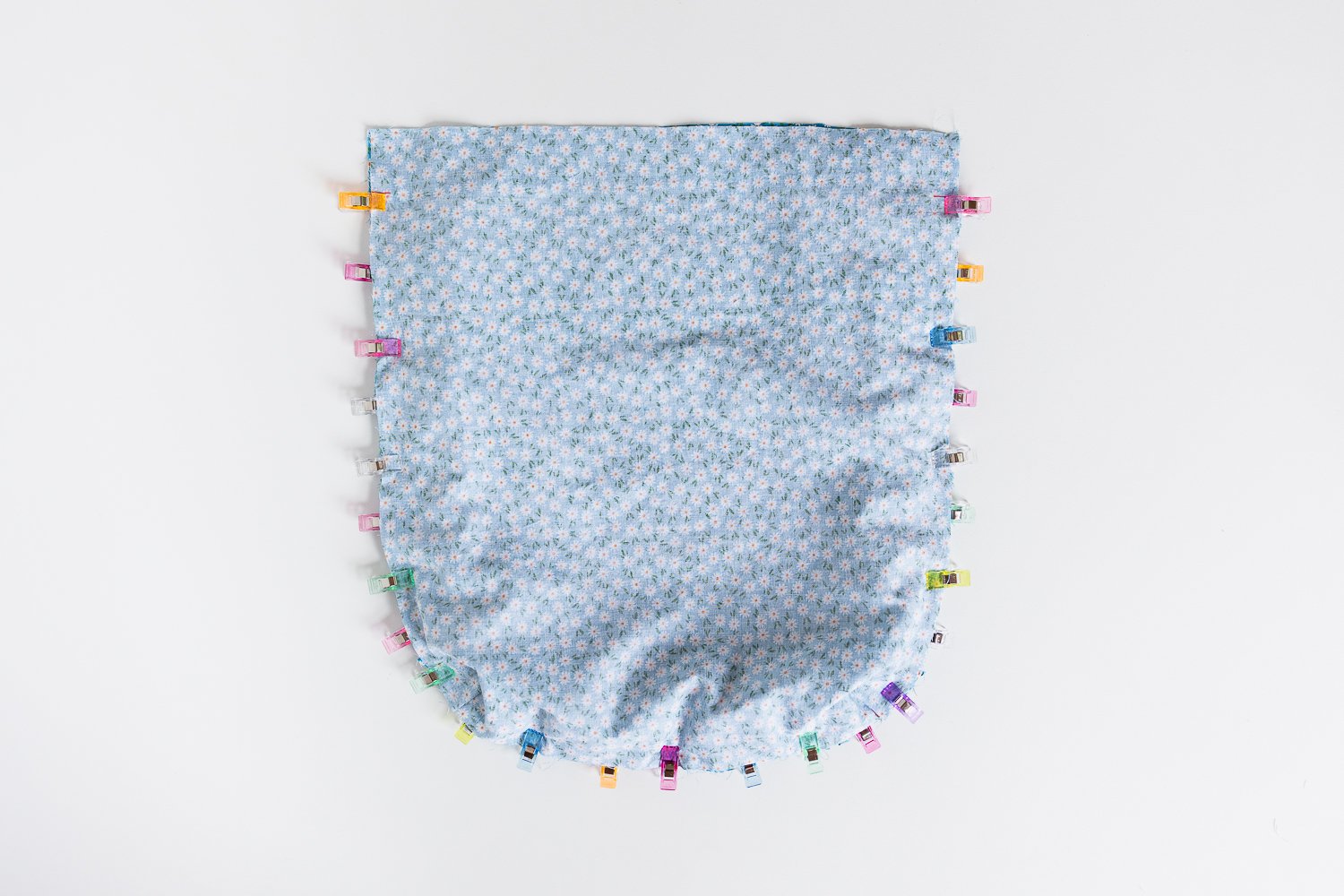
Be sure to keep the folded corners lined up while clipping.

Step 11: Sew around the sides and bottom with 3/8” (1 cm) seam allowance. Finish seam with serger or zigzag stitch.
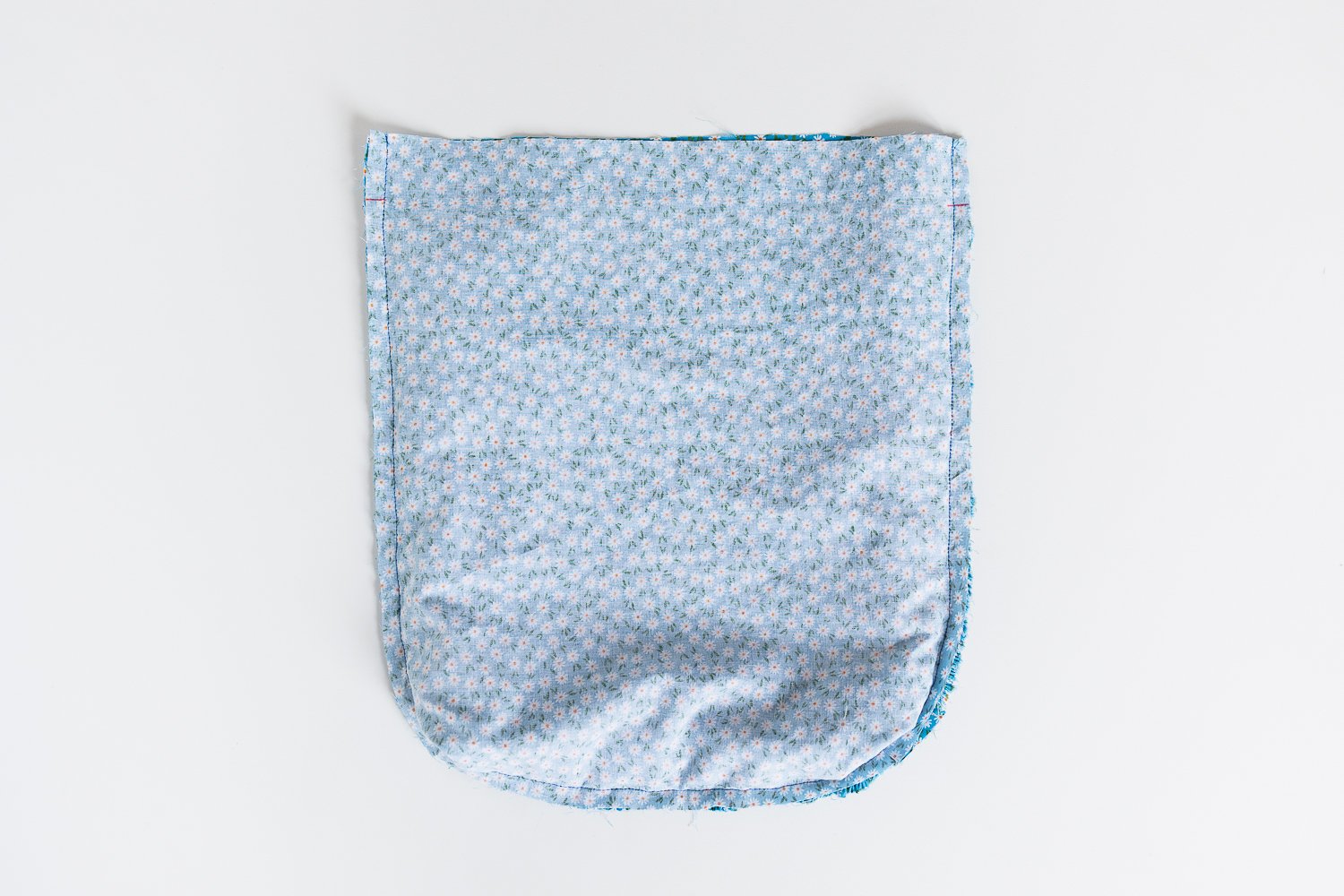
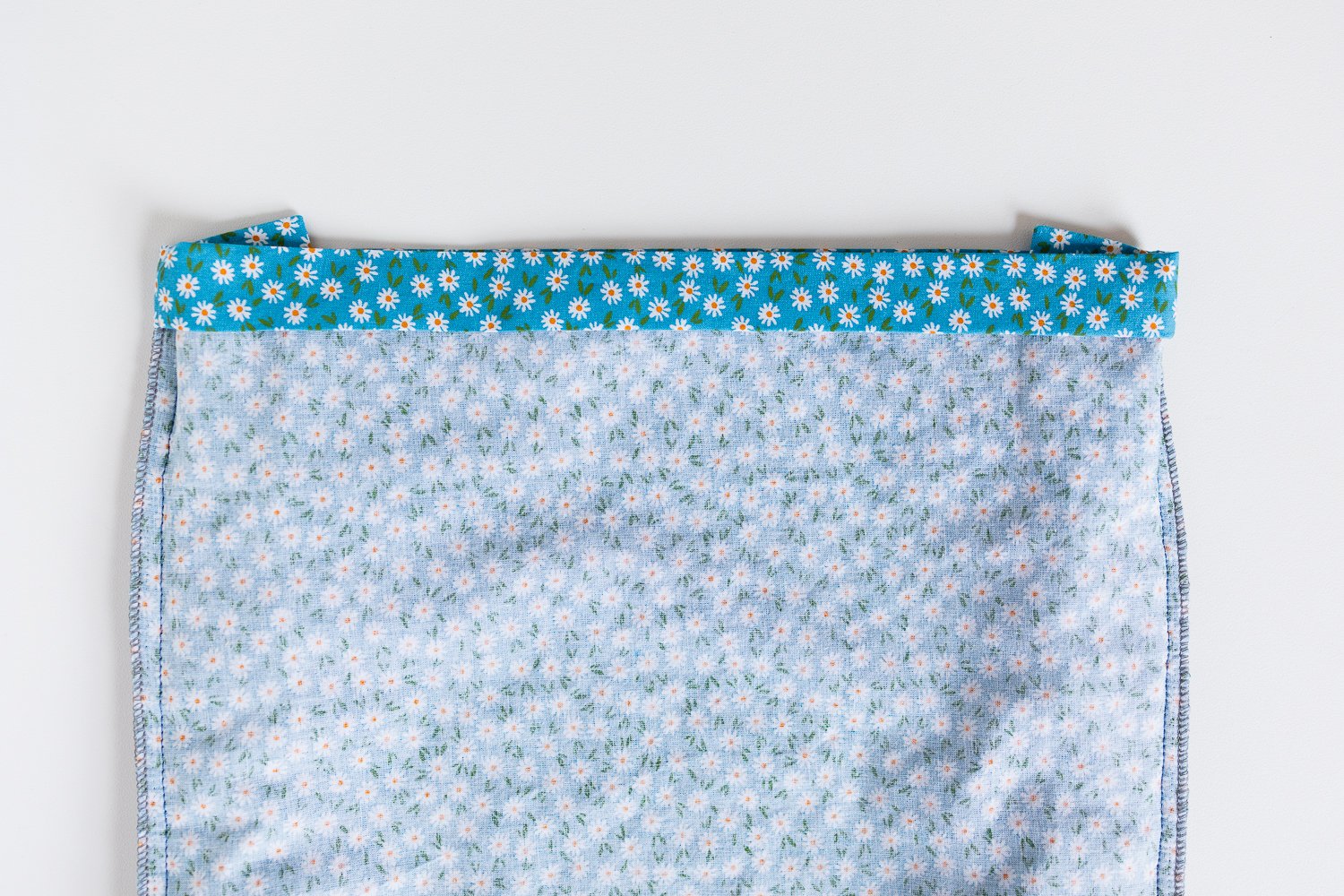
Step 12: Fold the top down toward the wrong side so it is flush with the ends of the ruffle. Press with a steamy iron.
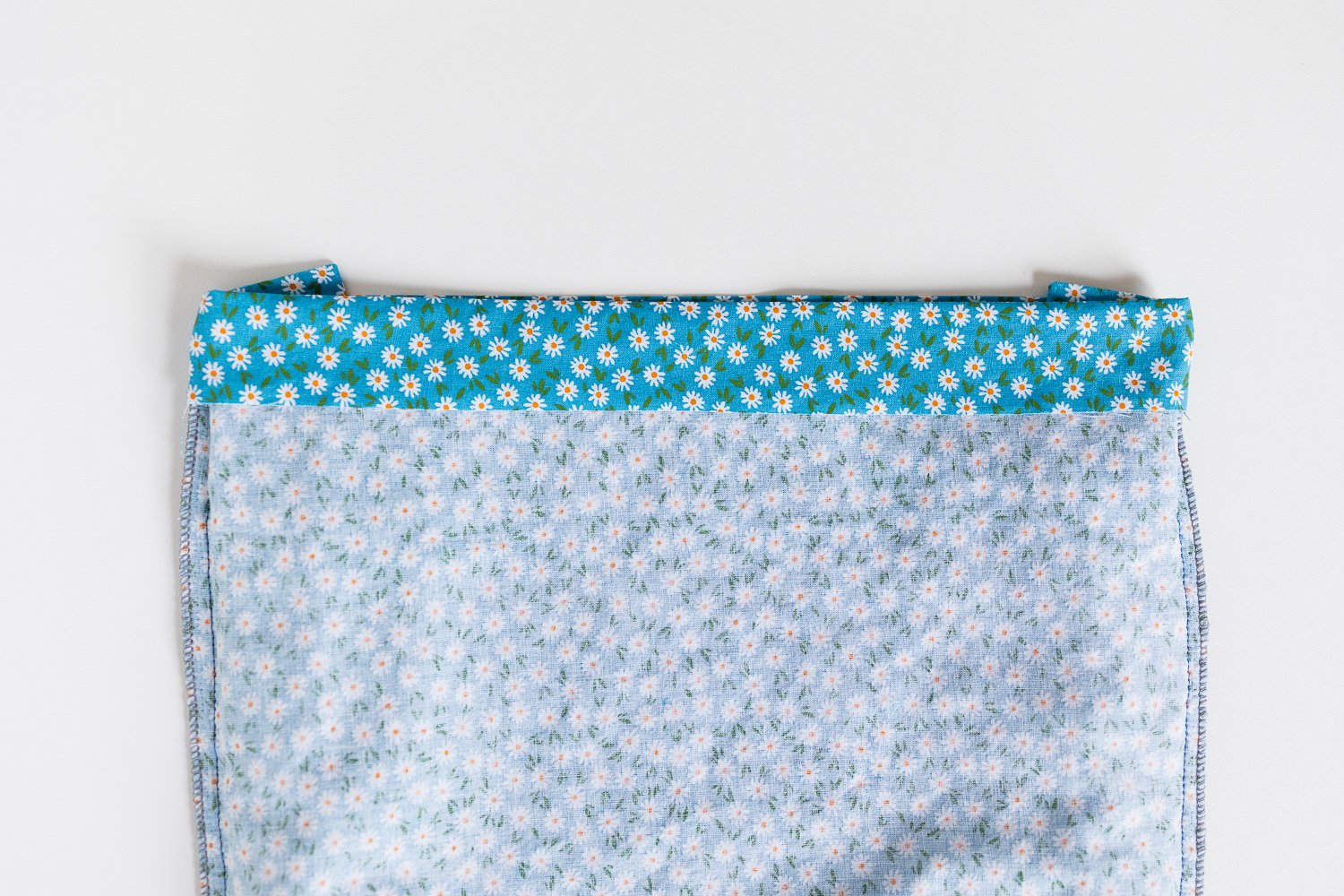
Step 13: Tuck the raw edge of the hem under 1/2” (13 mm). Press with a steamy iron.
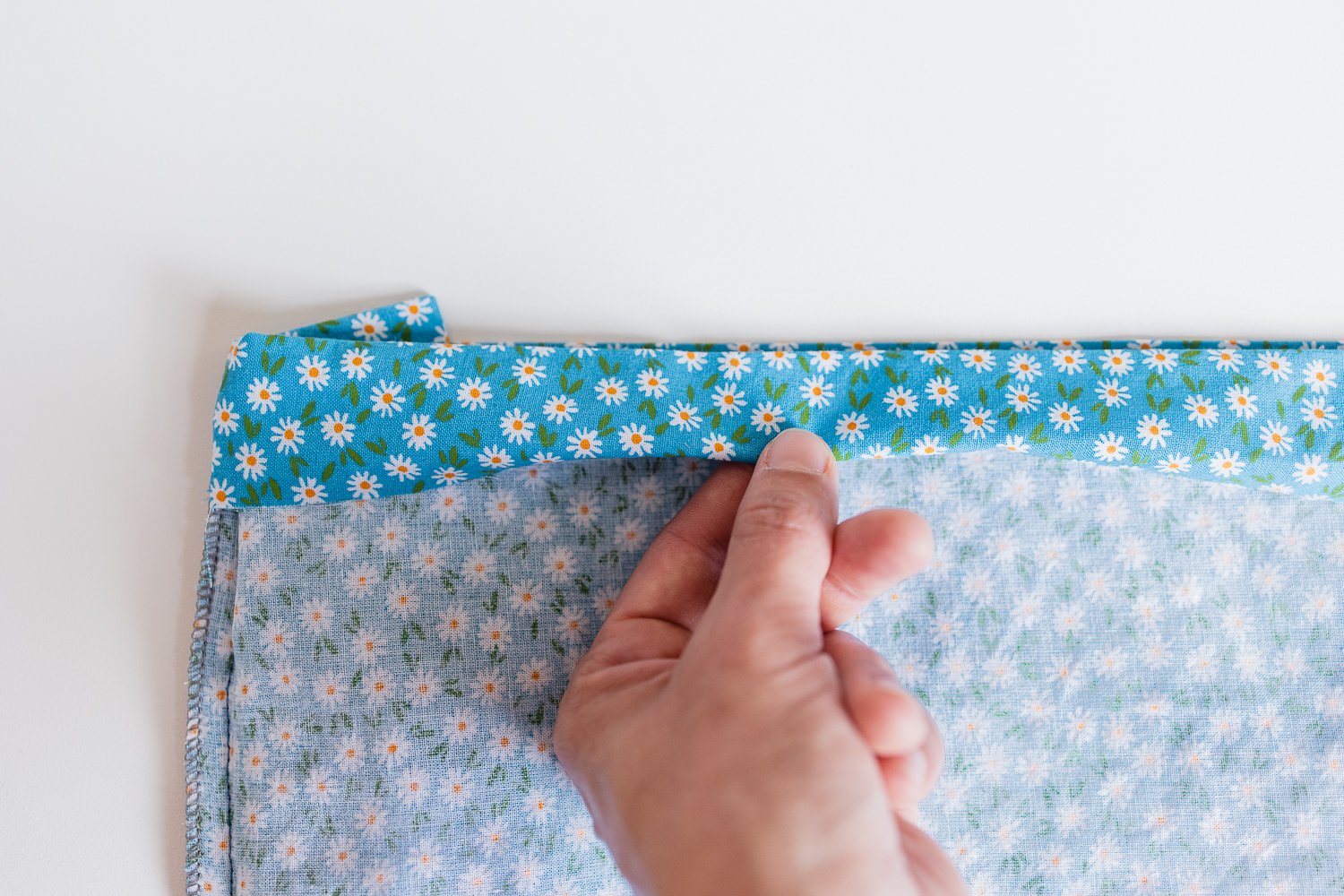
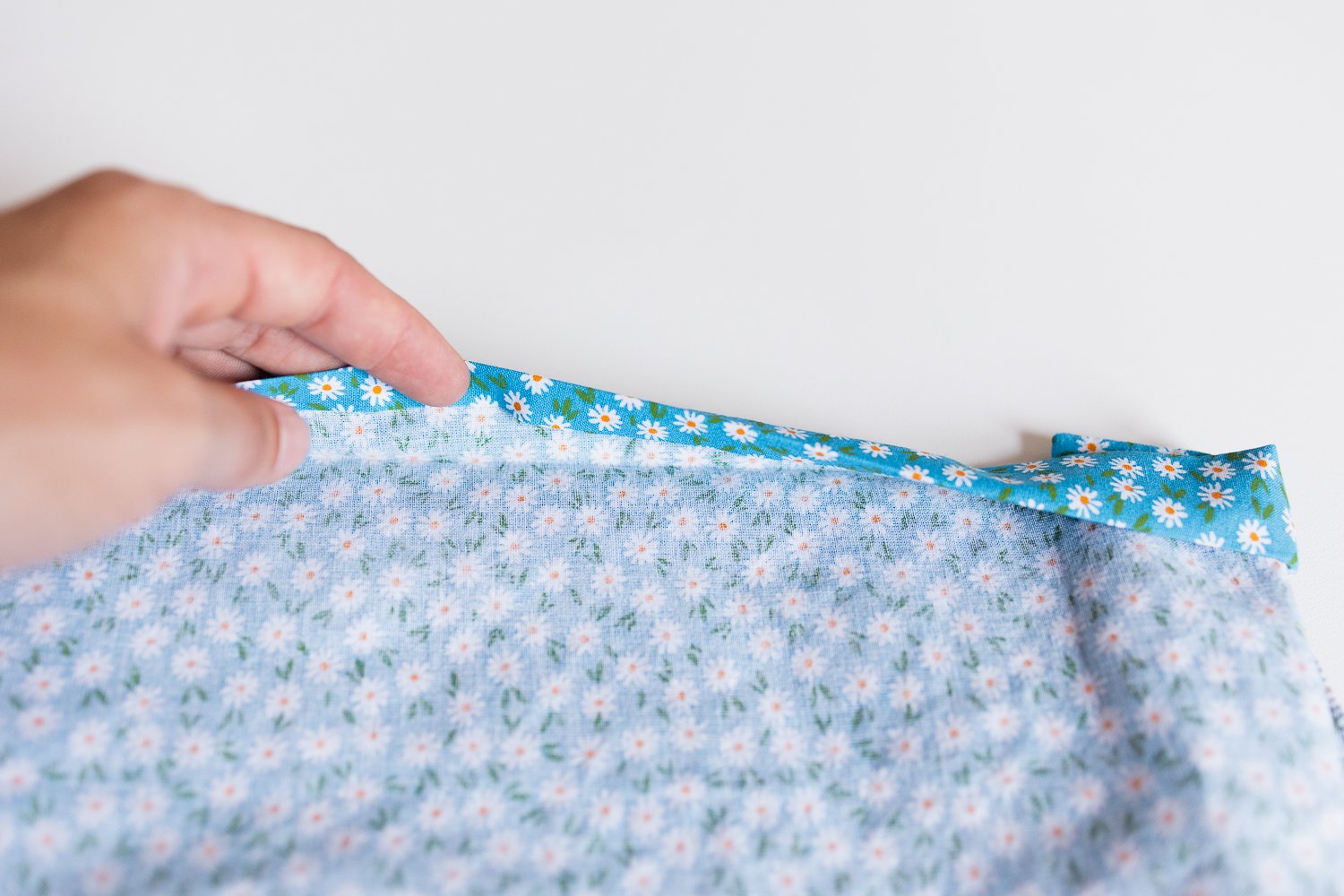
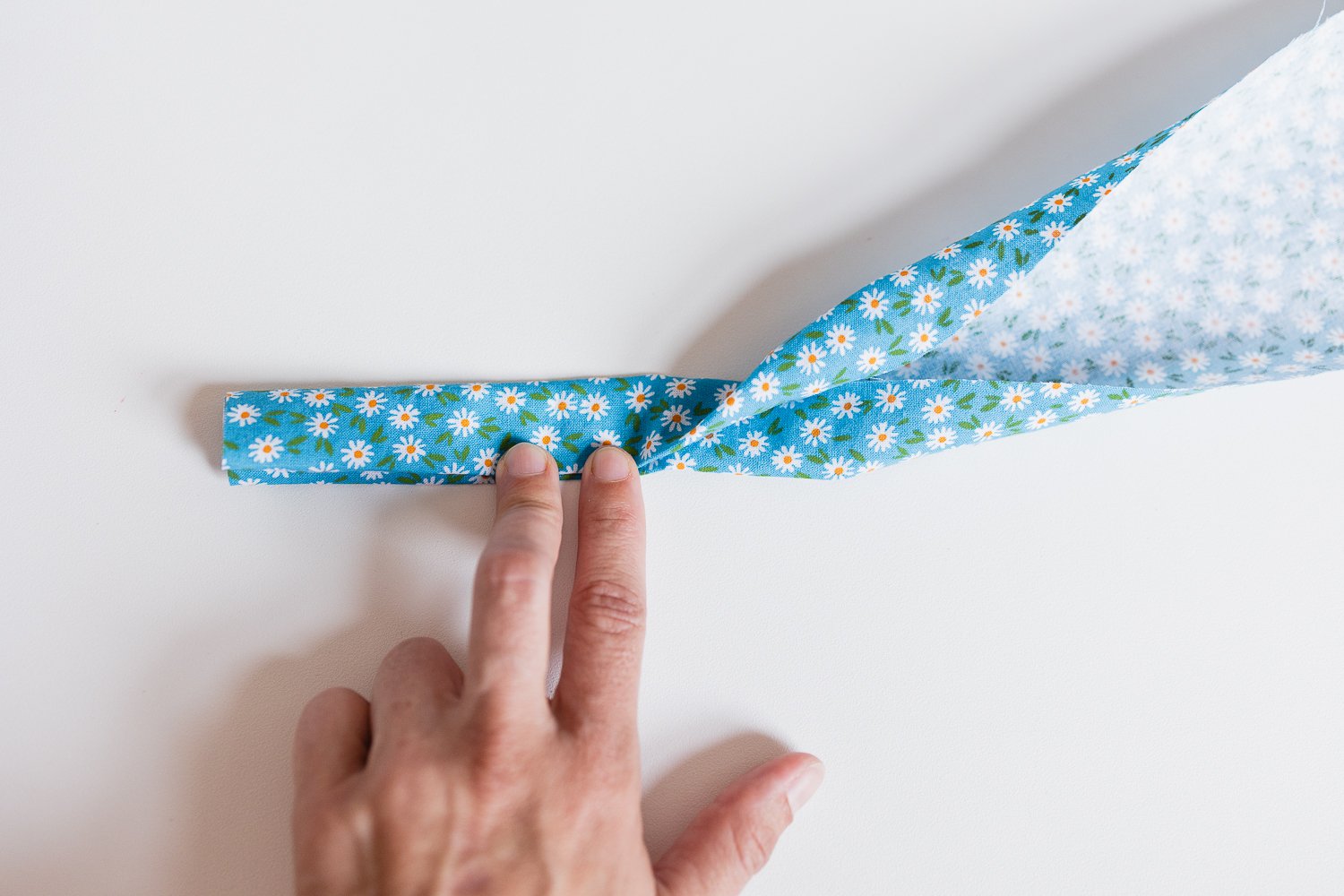
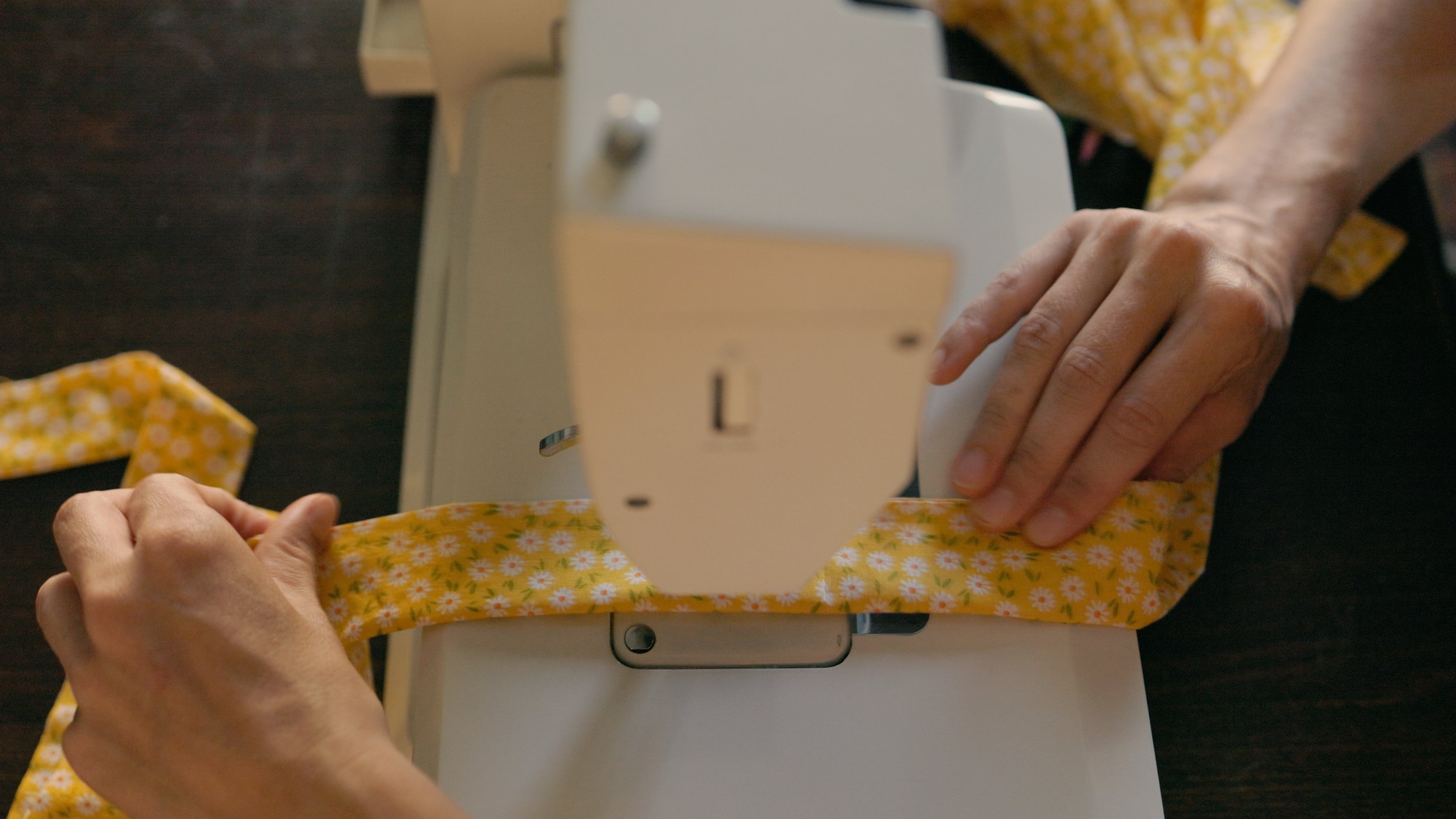
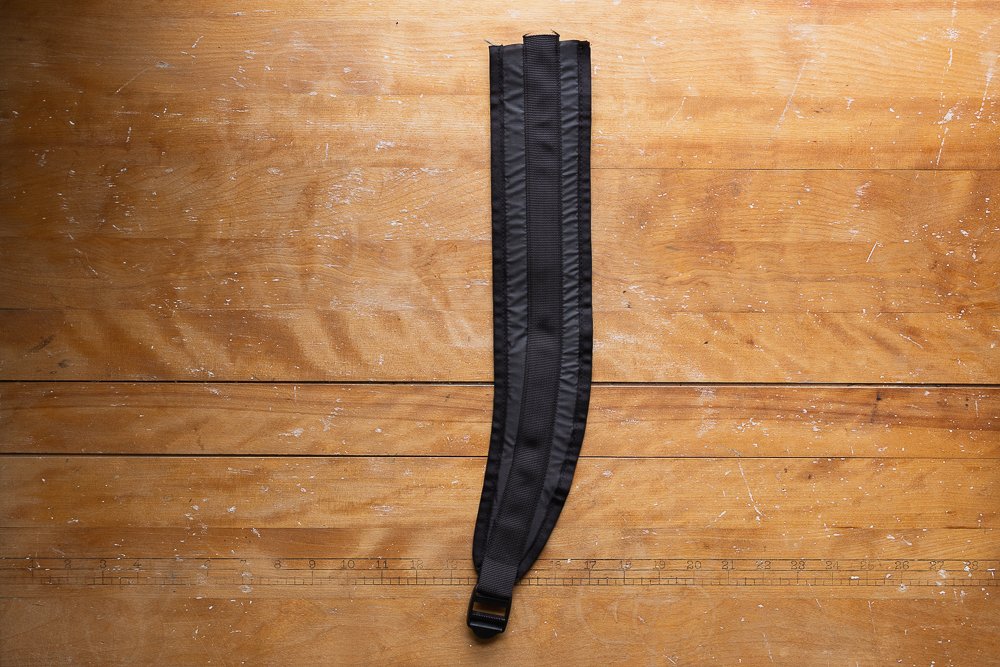
Step 14: Fold the sides of the handle fabric into fourths, tucking the raw edges into the center. Sew along the folded edge with 1/8” (3 mm) seam allowance.
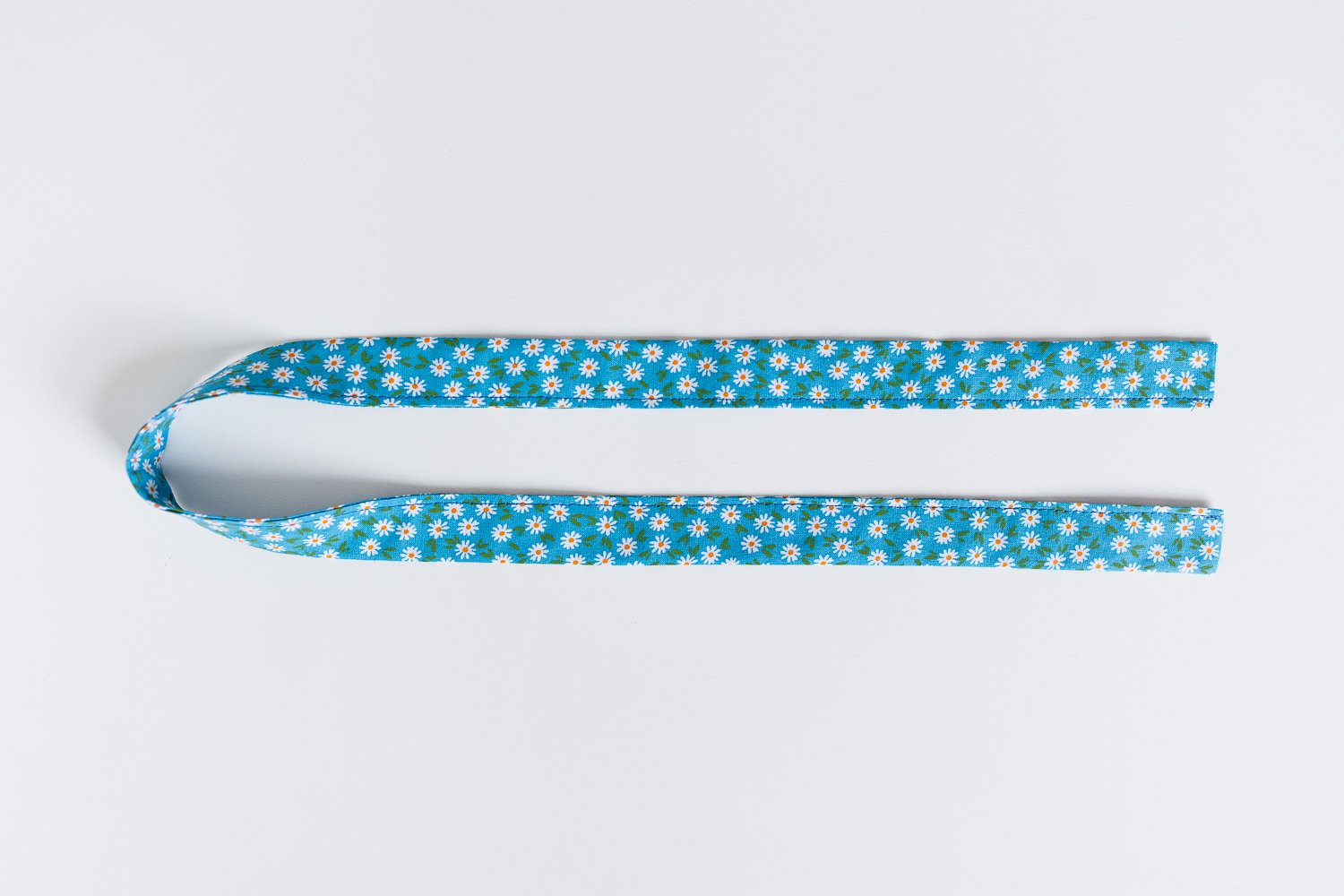
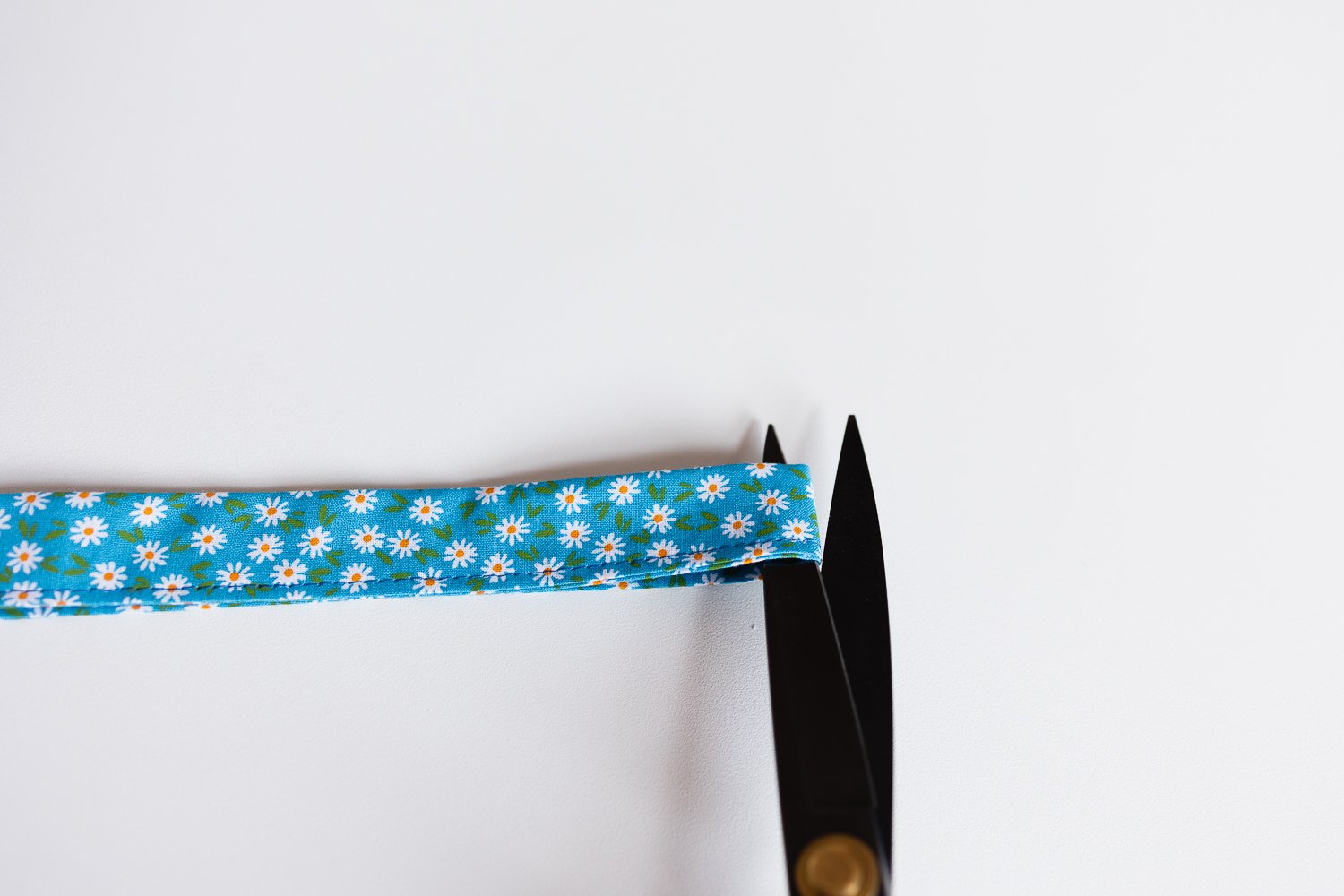
Step 15: Cut the 32” (81 cm) handle in half to make two handles.
Step 16: Fold the tote in half to find the center. Slip the handles under the hem on each side of the center. Clip in place.
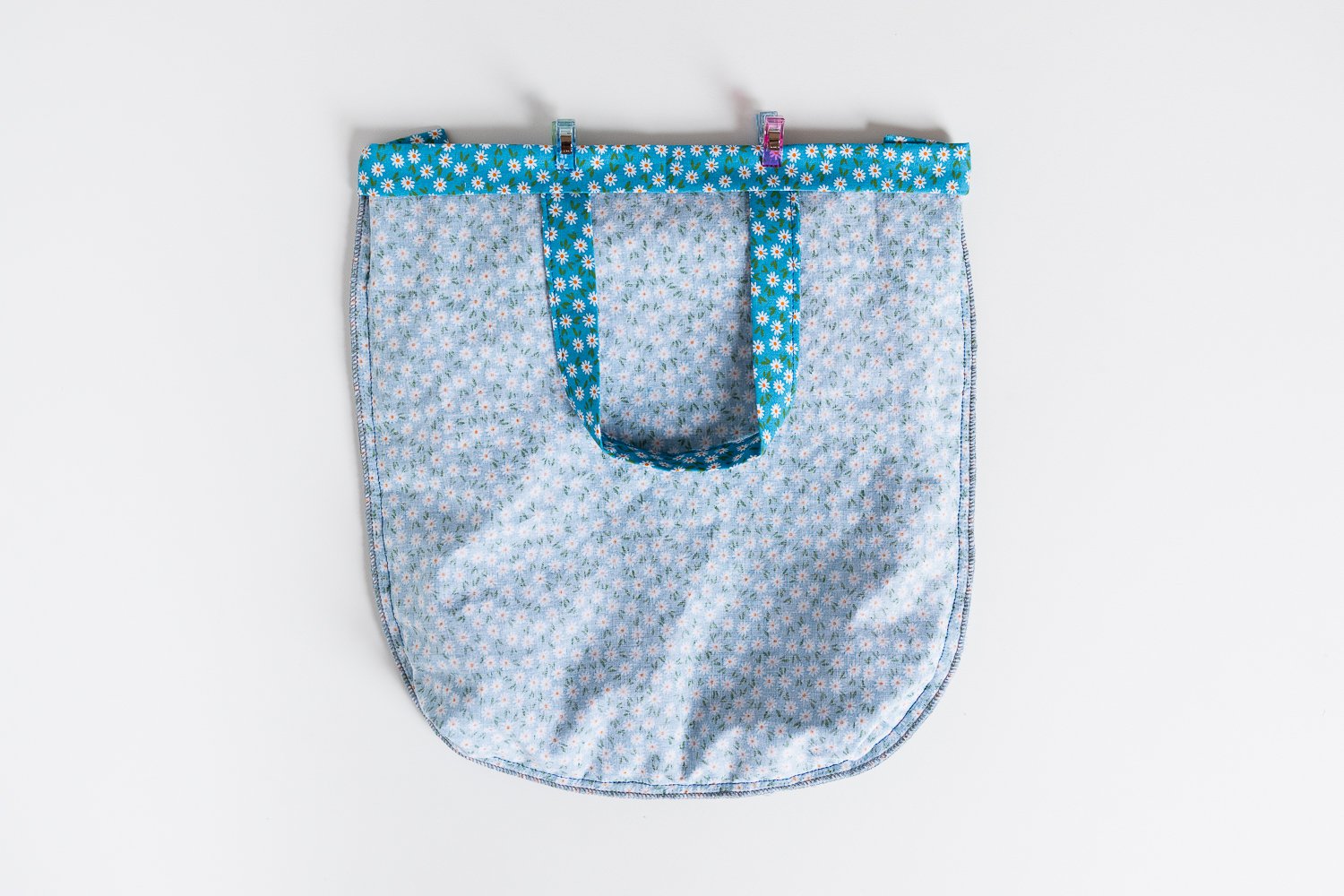
Step 17: Fold the ruffle out of the way and sew from side seam to side seam along the bottom edge of the hem with a 1/4” (3 mm) seam allowance. Repeat on the other side of the tote, folding the ruffle out of the way.
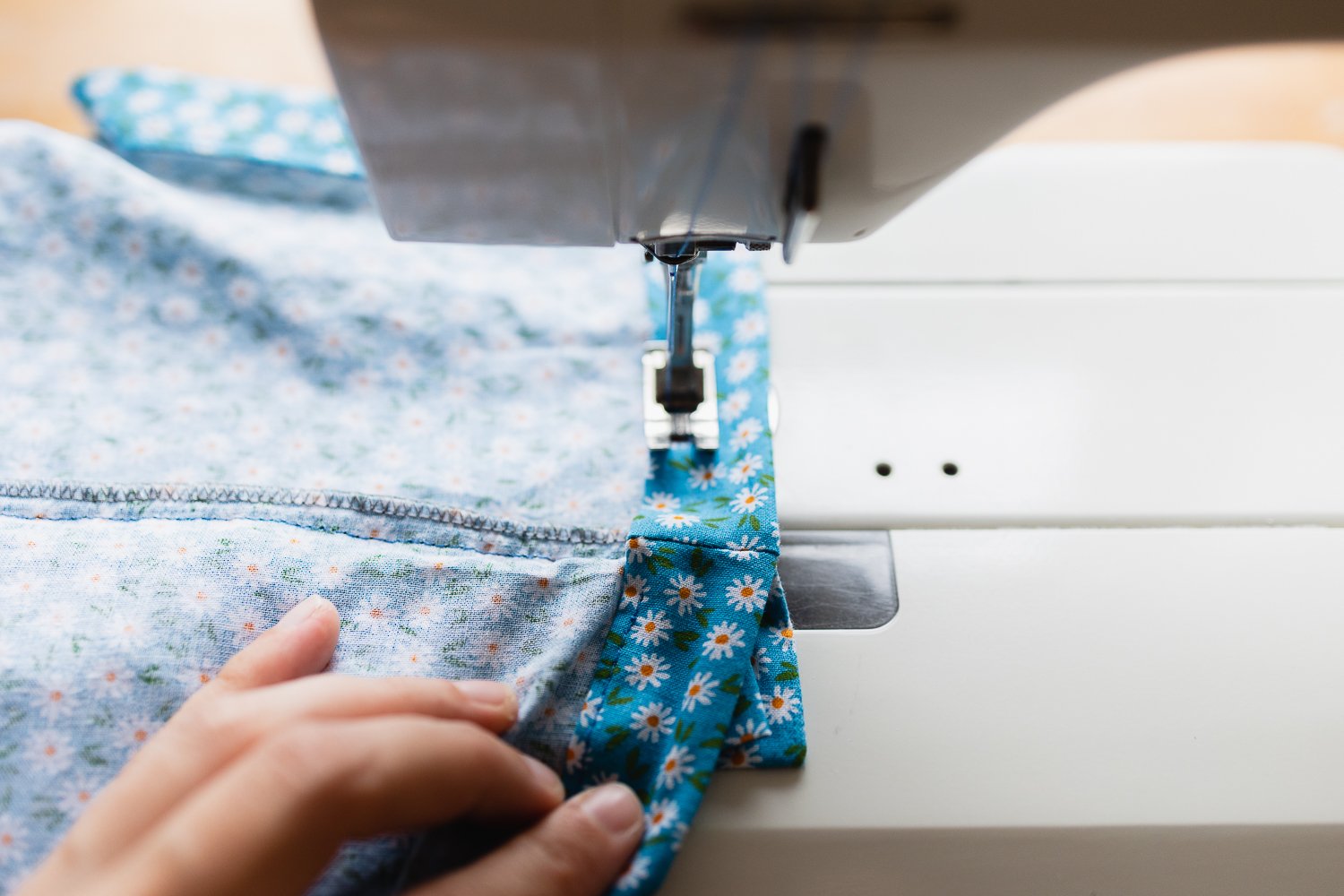
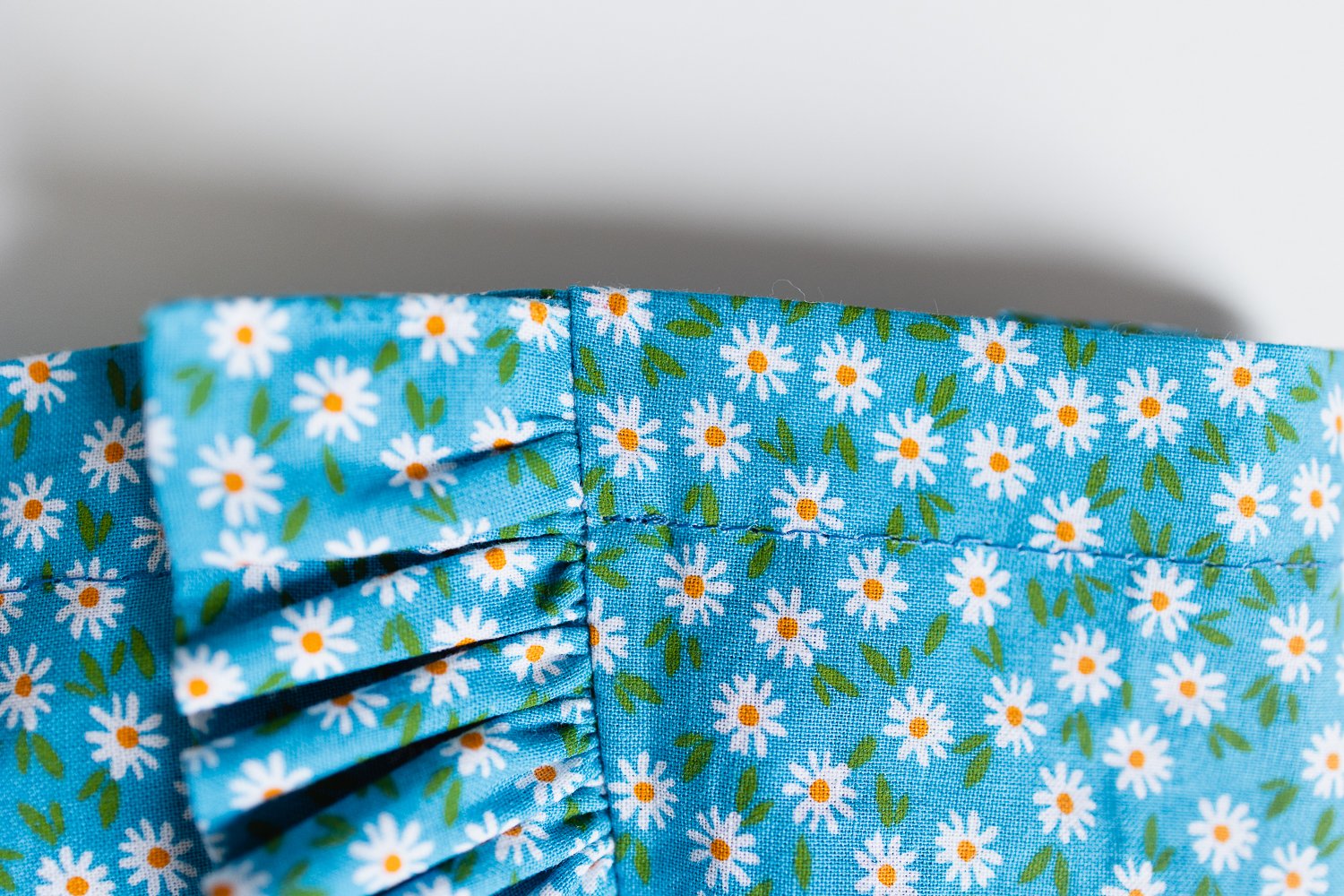
Step 18: Fold the handles up and sew bartacks along the top hem of the tote.
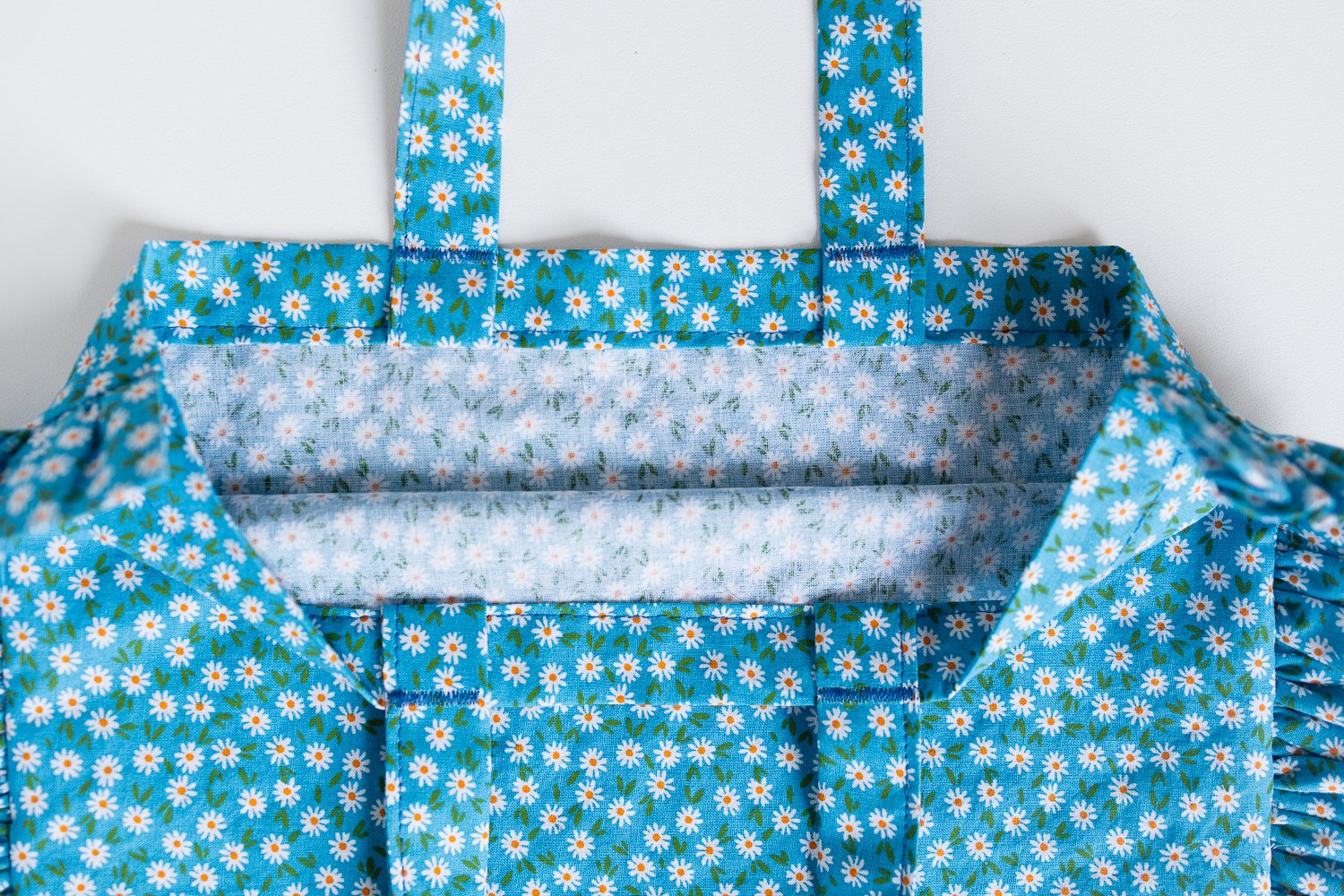
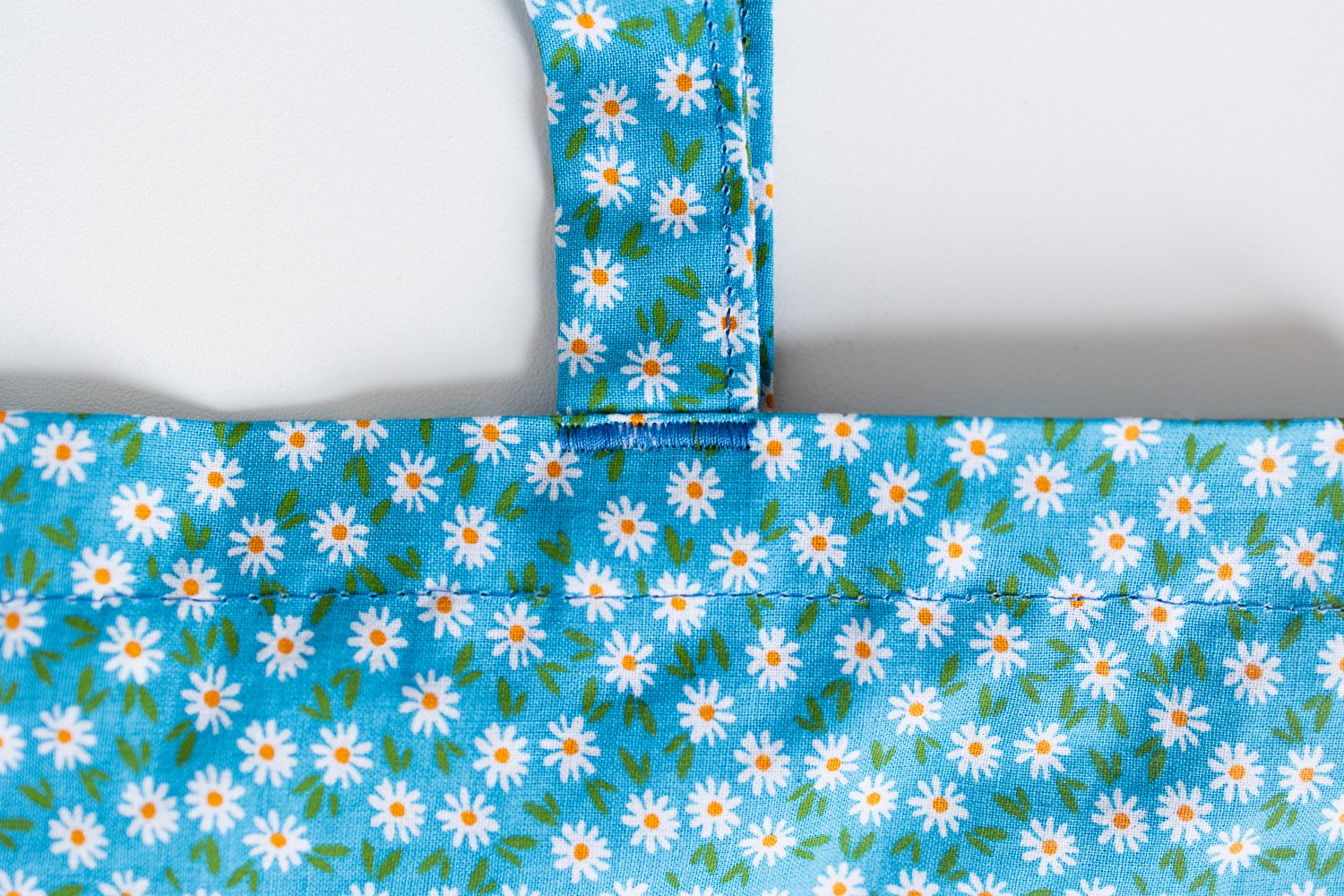
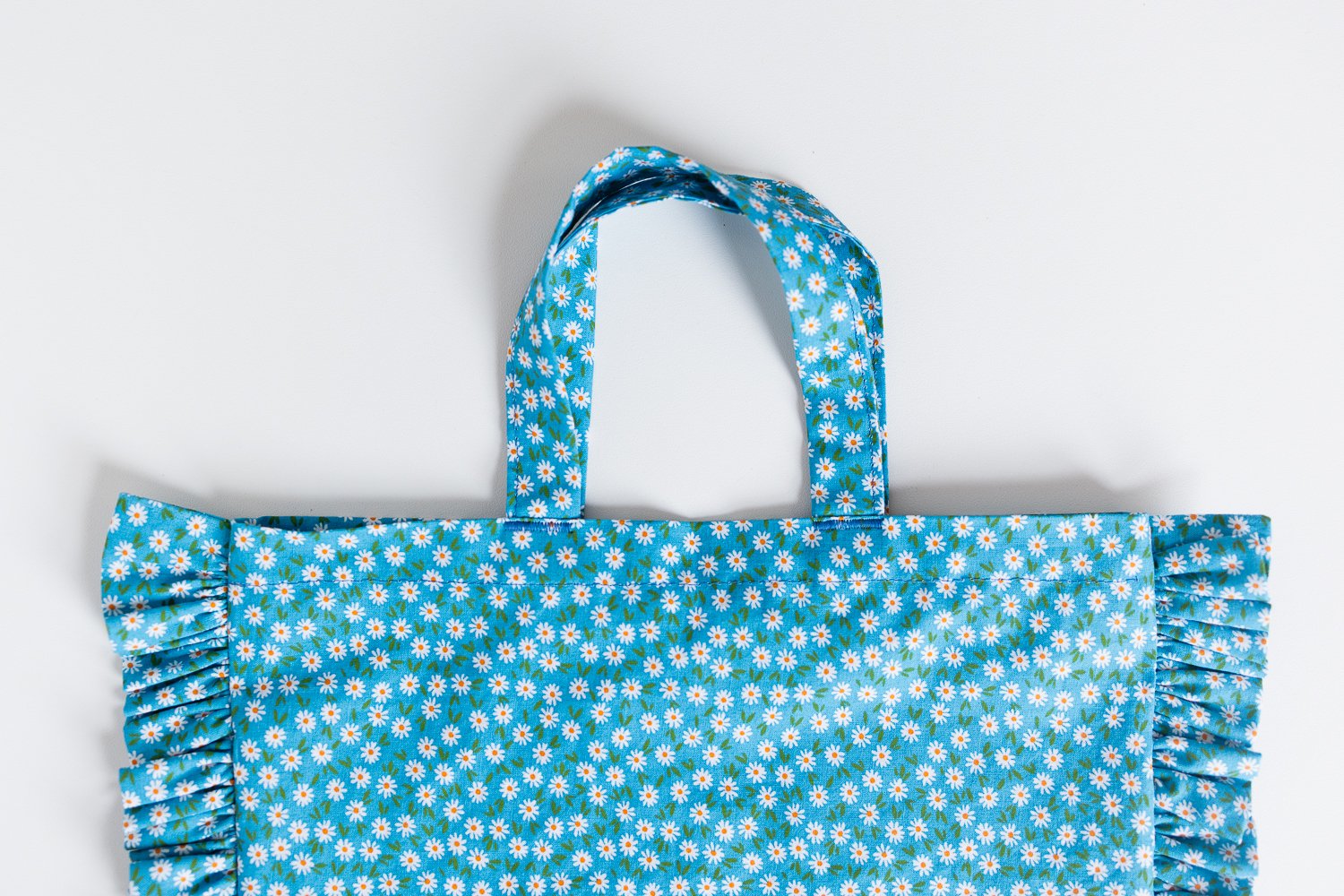
That’s it!
If you enjoyed this tutorial, you may also enjoy…
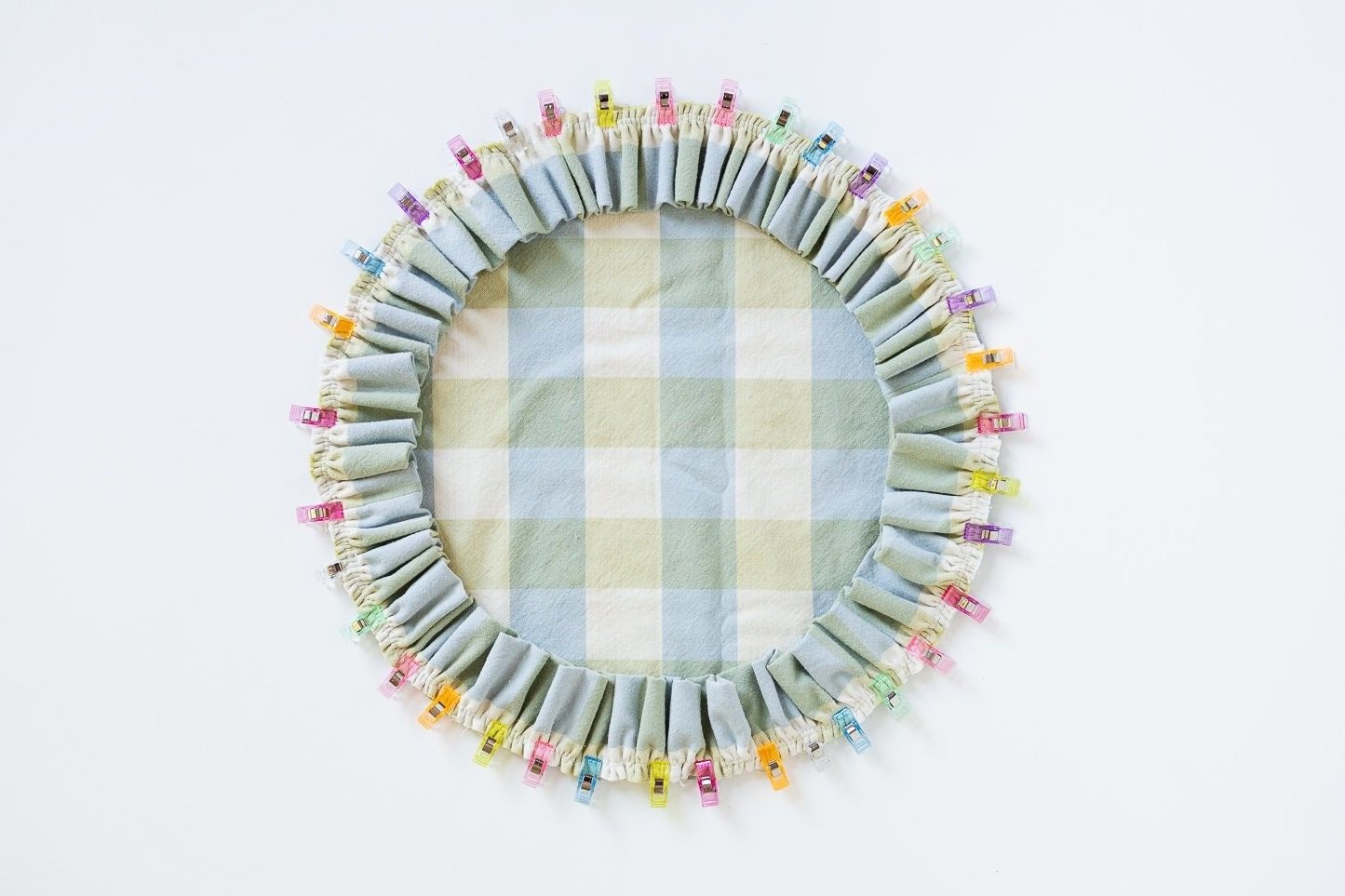
Step by step photo tutorial to fill your living room with pillows.

Step by step photo tutorial for sewing the Rosemary Wrap.

Step by step photo tutorial of each method.















The Chamomile Crop is designed to be a staple basic in your wardrobe — something to be dressed up or down, to serve as a base for layering on cool days, and worn sleeveless on warm days.
The crop version is fully French seamed and uses a wide, double rolled hem for a high quality tank top that feels beautiful next to your skin, thrives in normal wash machine cycles, and lasts for years.
The dress version has large, in seam pockets, flows in the wind, and has a beautiful 1” hem.
The crop pairs well with all your high waisted pants, skirts, and shorts and gives it a playful feel. The silhouette is thoughtfully designed to not flare at the waist but to hang straight down in a slim profile from your bust.
The Chamomile comes with two shoulder/neck views - Wide Shoulder and Narrow Shoulder. The Wide Shoulder has a higher front and back neckline, and lots of coverage on your shoulders. The Narrow Shoulder has a lower front and back neckline to let the sunshine hit you, and slim straps that favor the outer edge of your shoulders to perfectly hide your bra straps.
Simple, step-by-step illustrated instructions walk you through how to sew the French seams, the bias tape around the neckline and armholes, and the double rolled hem, and the pockets, and skirt gathering for the dress version.
This is a graded pattern that comes with a print at home, a US 36” copy shop version, and an A0 copy shop version.
Fabric notes: Works best with lightweight to midweight woven fabrics that have a good amount of drape such as sandwashed rayon or linen, linen and rayon blends, and homespun cotton.
Sewing level: Intermediate beginner
Format: PDF Copy Shop & Print at Home versions. A download link to the PDF files is sent directly to your inbox for immediate access!